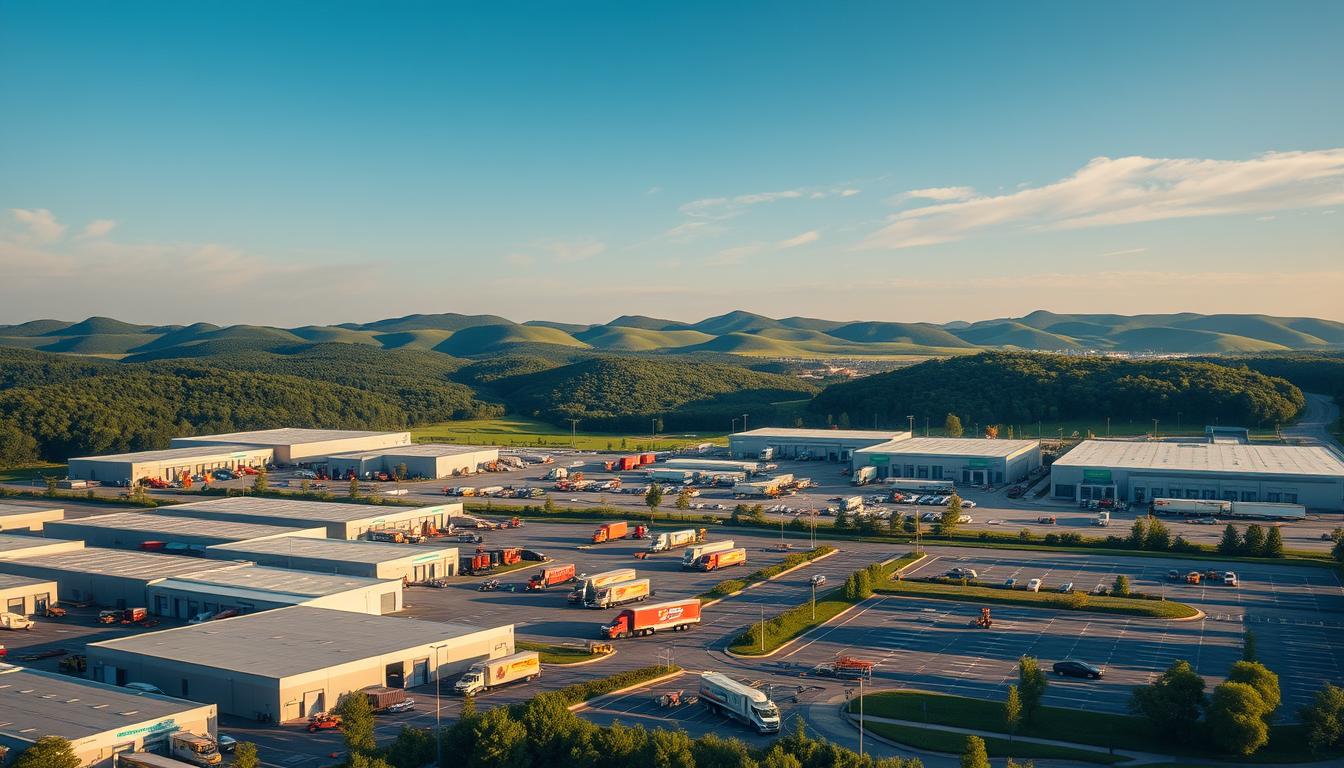
Choosing the right warehouse location is key for any business in logistics and supply chain. The site selection process must consider many factors. These include being close to customers and suppliers, good access to transportation, a skilled workforce, and affordable real estate.
Creating a detailed supply chain model is vital. It helps evaluate different network setups to find the best one. This model should look at transportation costs, inventory costs, and service levels. Working with a team that knows industrial real estate can offer great insights and help find the perfect spot.
Choosing a warehouse location means finding a balance. It’s important to be close to customers but also have easy access to highways, rail, and ports. The availability of skilled workers and affordable labor costs are also important. Plus, think about the site’s growth possibilities.
Key Takeaways
- Proximity to customers and suppliers is a key factor in distribution center site selection
- Access to transportation networks, including highways, rail, and ports, is essential
- Availability and cost of skilled labor must be evaluated
- Real estate costs and future growth should be considered
- Developing a detailed supply chain model helps find the best location
Key Factors in Distribution Center Site Selection
Choosing the right location for your warehouse and distribution center is key to success. You need to think about how close it is to your customers, transportation access, and the availability of workers. These factors are vital for smooth operations and growth.
Proximity to Customer Base and Markets
Being close to your customers is a big plus. It cuts down on shipping costs and speeds up delivery times. This also helps in building stronger customer relationships.
Look at where your customers are and pick a spot that’s easy to reach. Use shipping data to find out which areas are most important. Then, place your warehouse where it can serve these markets best.
Access to Transportation Networks
Good transportation access is essential for smooth logistics. Check if the location is near highways, railways, ports, and airports. This makes moving goods in and out cheaper and faster.
Choose a site with good roads and easy access to major routes like interstate highways. Also, make sure the area’s freight services are reliable and can handle your shipping needs.
Available Workforce and Labor Costs
Finding a skilled and reliable workforce is critical. Research the local job market to see if there are enough qualified workers. Look at the area’s population, education levels, and experience in your industry.
Also, consider the cost of labor. Wages, benefits, and other expenses can affect your costs. Find a balance between a good talent pool and keeping labor costs down.
Assessing Your Company’s Distribution Needs
Before picking a warehouse location, you must assess your new distribution site needs. This means looking at how you manage your inventory, your supply chain, what your customers want, and the life cycle of your products. Knowing these details helps find the best spot and setup for your warehouse or distribution center.
When checking your distribution needs, consider a few important points:
- How often you sell items and how much space you need to store them
- How you predict demand and if it changes with the seasons
- What your customers want in terms of getting their orders and shipping
- The size, weight, and how long items last
Different types of businesses face different challenges. For instance, online stores need quick order handling and fast delivery to customers. On the other hand, companies that make products might want to be close to suppliers and transportation centers. Knowing what your industry needs helps choose the right location.
Also, think about whether to keep all your inventory in one place or spread it out. Keeping everything in one spot can make things easier and cheaper. But, having warehouses in different places might be better if you serve customers all over or need to get items to them fast.
By doing a detailed check of your distribution needs, you can make smart choices about where to put your warehouse. This ensures your inventory management and supply chain match what your customers need and the life cycle of your products.

Evaluating Potential Warehouse Locations
When looking for the perfect warehouse spot, many important factors need to be checked. These ensure the site fits your company’s needs. A detailed look at these elements helps you choose wisely and improve your supply chain.
Geographic Location and Accessibility
The location of a warehouse is key. Being close to highways, airports, and seaports can cut down on costs and speed up deliveries. Look at how easy it is to get to the site, including traffic, road conditions, and other routes.
Infrastructure and Utilities
Check what’s available at the warehouse site. Make sure it has the basics like:
- Electricity: Enough power for operations and equipment
- Water: Enough for fire systems, bathrooms, and more
- Telecommunications: Good internet and phone for easy communication
- Sewage and waste management: Safe disposal of waste and water
Zoning and Regulations
Look into the zoning laws and local rules before choosing a warehouse. Make sure it’s allowed for industrial or commercial use. Check if your plans follow all rules. Consider things like:
- Building codes and permits
- Environmental laws
- Rules on noise and emissions
- Requirements for parking and loading
By carefully checking the location, access, infrastructure, utilities, zoning, and rules, you can pick a site that meets your needs. This ensures your warehouse fits your company’s goals and criteria.

Choosing the Right Warehouse Size and Layout
When picking a warehouse, think about your business’s now and future needs. The size and layout of the warehouse affect how efficient and productive you can be. They also impact your ability to grow and expand.
Start by looking at your current inventory levels. Figure out how much space you need based on your stock and future demand. Remember, your inventory might change with the seasons or market trends. So, having some extra space is key.
Learn more about which Types of Warehouse Construction fit your business.
Forecasting Future Growth and Expansion
Think about how your business might grow in the future when choosing a warehouse. Consider your long-term goals and how fast you expect to grow. Will you add new products or enter new markets? Make sure the warehouse can grow with you without needing a big move or expensive changes.
Look for warehouses that can grow with you. This might mean extra land for building or the chance to lease more space as you grow. Planning ahead can save you from the hassle and cost of moving later.
Optimizing Warehouse Efficiency and Productivity
The layout of your warehouse is very important for efficiency and productivity. A well-designed layout helps workers move faster and reduces congestion. Think about using vertical space, like high shelves or mezzanines, to make the most of your area.
Managing your inventory well is also key to a smooth warehouse operation. Use a warehouse management system (WMS) to keep track of your stock. This way, you can store items where they’re easiest to get to. Try advanced storage methods like cross-docking or zone picking to speed up order processing and cut down on errors.
By choosing the right warehouse size and layout, planning for growth, and focusing on efficiency, you can build a distribution facility that supports your business’s success. This will help you now and in the future.
Distribution Center Site Selection Process and Criteria
Choosing a distribution center site is a detailed process. It looks at different sites based on clear criteria. This ensures the site meets the company’s needs, saves money, and reduces risks.
The first step is a cost analysis. It checks land prices, labor costs, and other expenses. These costs are key to deciding if a site is good for a distribution center.
Next, the business environment is evaluated. This includes the local workforce, transportation access, and how easy it is to do business. A good environment can make a distribution center more efficient and successful.
Risk assessment is also vital. Companies look at inflation, currency changes, political stability, and natural disaster risks. This helps them plan for any problems that might come up.
| Selection Criteria | Key Factors |
|---|---|
| Cost Analysis | Land prices, real estate costs, labor costs, transportation expenses, taxes, incentives |
| Business Environment Quality | Workforce availability, accessibility, supplier proximity, ease of doing business |
| Risk Assessment | Inflation rates, currency exchange rates, political stability, transparency, natural disaster risks |
The importance of these criteria can change based on the company and location. By carefully looking at each factor, companies can choose the best location for their distribution center.
Negotiating Lease or Purchase Agreements
Choosing the right warehouse location is key for your logistics service and distribution center. It’s important to negotiate good lease or purchase agreements. Knowing the real estate market and long-term costs helps you make smart choices that fit your budget and goals.
To negotiate well, you need to know the local real estate market. Important things to look at include:
- Current vacancy rates for industrial properties
- Average rental rates for similar warehouses
- Market demand and competition for available spaces
With this knowledge, you can negotiate better terms. You’ll find the right warehouse at a good price.
Understanding Real Estate Market Trends
Keeping up with real estate trends is vital for negotiating. Watch for:
- Changes in vacancy rates and rental rates over time
- Shifts in market demand for industrial properties
- New developments or renovations in the area that could impact property values
By tracking these trends, you can make smart decisions. This helps you structure your agreement for the best outcome.
Evaluating Long-Term Costs and Benefits
When comparing lease or purchase agreements, look at more than just the initial costs. Consider the long-term financial impact. Key factors include:
- Lease duration and renewal options
- Rent escalation clauses and operating expense responsibilities
- Purchase price and financing terms
- Potential for appreciation or depreciation of the property value over time
By weighing the long-term costs and benefits, you can choose wisely. This supports your company’s financial goals and provides a solid base for your operations.
To get ahead in negotiations, consider working with experienced real estate pros. They know the market well. They can find hidden opportunities and negotiate the best terms for you.
Discover more with the Guide to Warehouse Construction Costs.
Integrating Technology in Warehouse Operations
In today’s fast-paced world, using advanced warehouse technology is key. It helps optimize logistics and distribution center operations. Solutions like Warehouse Management Systems (WMS), Automated Storage and Retrieval Systems (AS/RS), and the Internet of Things (IoT) boost efficiency, accuracy, and productivity.
Warehouse Management Systems (WMS)
A strong WMS is vital for modern warehouses. It gives real-time insights into inventory, orders, and shipping. This automation and smart insights lead to better decisions and resource use. It improves efficiency and customer happiness.
| WMS Feature | Benefit |
|---|---|
| Real-time inventory tracking | Accurate stock levels and reduced stockouts |
| Automated order processing | Faster order fulfillment and reduced errors |
| Intelligent picking routes | Optimized labor utilization and increased productivity |
Automated Storage and Retrieval Systems (AS/RS)
AS/RS technology changes how warehouses handle materials. It includes robotic cranes, shuttles, and carousels. These systems cut labor costs, use space better, and boost accuracy.
By automating tasks, AS/RS lets staff focus on more important work. This boosts overall efficiency.
Internet of Things (IoT) in Warehouse Environments
The IoT is changing warehouse operations. It tracks assets, monitors conditions, and predicts maintenance. IoT connects devices, sensors, and equipment, giving insights to improve processes.
Some key IoT uses in warehouses include:
- Real-time location tracking of inventory and equipment
- Environmental monitoring for sensitive products
- Predictive maintenance of warehouse machinery
- Automated safety compliance and risk management
By using these advanced technologies, companies can stay ahead. They improve customer service and drive success in logistics and distribution.
Conclusion
Picking the best warehouse location is key for companies. They need to boost their supply chain and stay ahead of the game. They should think about being close to customers, having good transport links, and finding the right staff.
Getting help from experts and doing deep research is vital. They know about real estate, transport, and rules. This helps companies choose the best spot for their warehouse.
Using new tech like warehouse systems and the Internet of Things can make things better. It helps with keeping track of stock, cuts costs, and makes work more efficient. This tech can make a big difference in how well a company runs.
Choosing the right warehouse location is critical for a company’s success. By carefully picking a spot and thinking about all the important things, businesses can thrive. They can stay ahead in the changing world of supply chain management.
FAQ – Warehouse and Distribution Center Location
What are the key factors to consider when selecting a warehouse location?
When picking a warehouse spot, think about how close it is to customers and suppliers. Also, check if it’s easy to get to by road, rail, air, or sea. Look at the cost of land and buildings, and if you can grow there in the future.
How does proximity to customer base and markets impact warehouse location selection?
Being close to customers and markets cuts down on shipping costs and speeds up deliveries. It also helps build stronger ties with important people. This makes it a key part of choosing the right warehouse location.
What transportation networks should be considered when evaluating a warehouse location?
Good access to roads, railways, airports, and ports is vital for smooth logistics. Checking how close these are to the warehouse is important when picking a site.
How do a company’s specific distribution needs influence warehouse location selection?
Knowing your company’s specific needs is key. This includes how you manage stock, your supply chain, customer needs, and product life cycle. Each industry has its own needs, helping decide if stock should be kept in one place or spread out.
What are the key considerations when evaluating a warehouse location?
When looking at warehouse locations, consider the area and how easy it is to get to. Also, think about the infrastructure, utilities, and local rules. Being near major roads, shipping centers, and logistics hubs is important, as is having access to utilities and following local laws.
How can companies choose the right warehouse size and layout?
Choosing the right size and layout means thinking about future growth. Companies should plan for both now and later to avoid running out of space or spending too much. Making the warehouse efficient and productive is key, using technology and smart storage and retrieval methods.
What criteria are used in the distribution center site selection process?
The site selection process looks at many factors. These include costs like land, real estate, labor, and taxes. It also looks at the business environment, like labor, suppliers, and ease of doing business. And it considers risks like inflation and natural disasters.
How can companies negotiate favorable lease or purchase agreements for warehouse facilities?
To get a good deal, understand the real estate market and compare costs and benefits. Working with experts in industrial properties can help you get the best terms for your warehouse.
What role does technology play in optimizing warehouse operations?
Technology like WMS, AS/RS, and IoT can make warehouses more efficient and accurate. It gives real-time insights, streamlines processes, cuts costs, and boosts productivity.