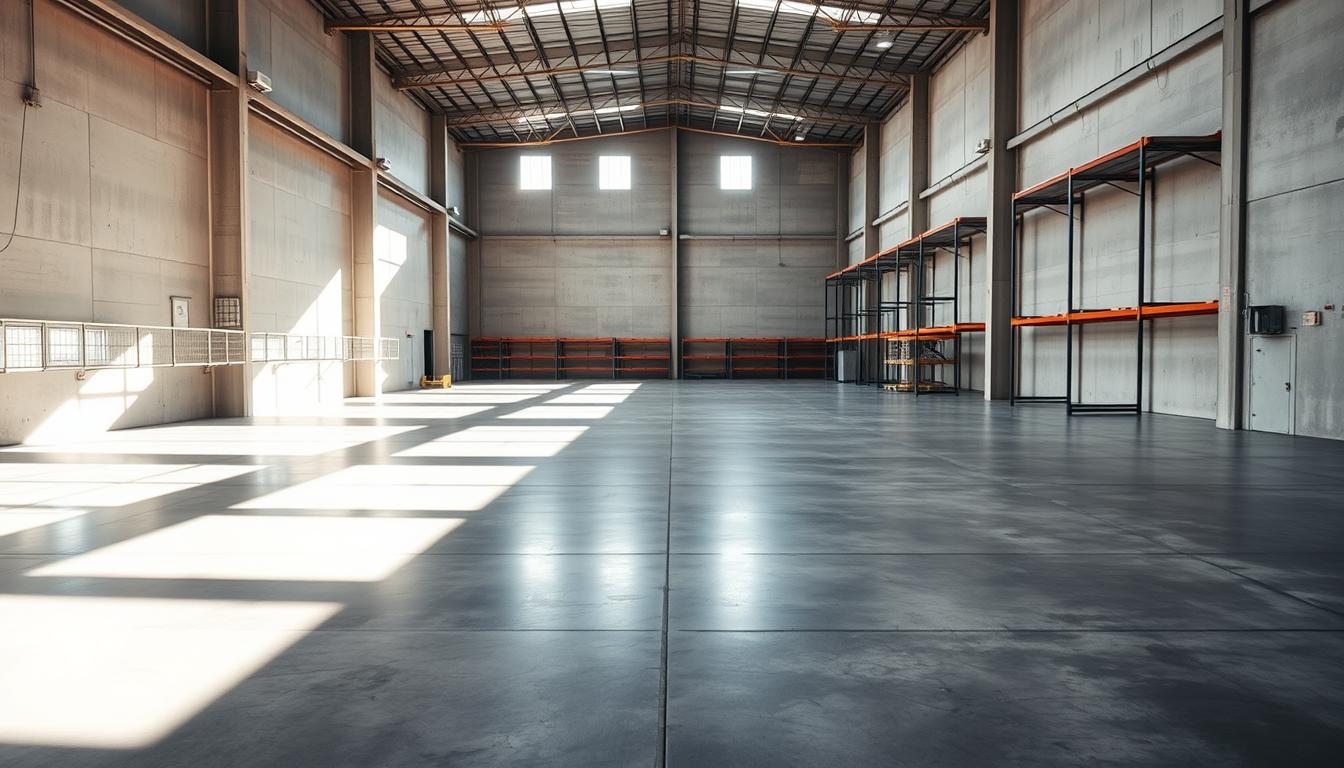
The foundation of a concrete warehouse is key. It faces daily wear from heavy equipment, foot traffic, and spills.
Across the U.S., industrial sites struggle with the same issue. They need the right warehouse flooring that can handle huge loads without damage. Distribution centers, moving thousands of items daily, need reliable concrete flooring solutions for smooth operations.
Quality commercial warehouse flooring is vital for your business. It’s not just durable; it supports growth and is long-lasting. It handles forklifts, chemical spills and wear and tear ensuring smooth operations for years.
At MBC Management in Houston, we gets this. We offer a wide range of flooring services for warehouses. The wrong choice can cause downtime and safety risks.
Key Takeaways
- Warehouse floors endure heavy loads and constant traffic requiring specialized durability
- Professional installation prevents costly downtime and safety hazards
- Quality flooring systems resist chemical spills and equipment damage
- Proper industrial floor selection supports long-term operational efficiency
- Industrial facilities need surfaces designed for heavy equipment movement
- Investment in quality flooring protects business operations and growth
Popular Concrete Warehouse Flooring Solutions Warehouses Rely On
At MBC Management in Houston, we often pick from three main concrete types of warehouse flooring. We choose based on their needs and budget. Each option has its own benefits, making them perfect for different operations.
Modern warehouse concrete is versatile and performs well. It handles heavy forklifts and chemical spills easily. Let’s look at the three top choices that are favorites among warehouse managers.
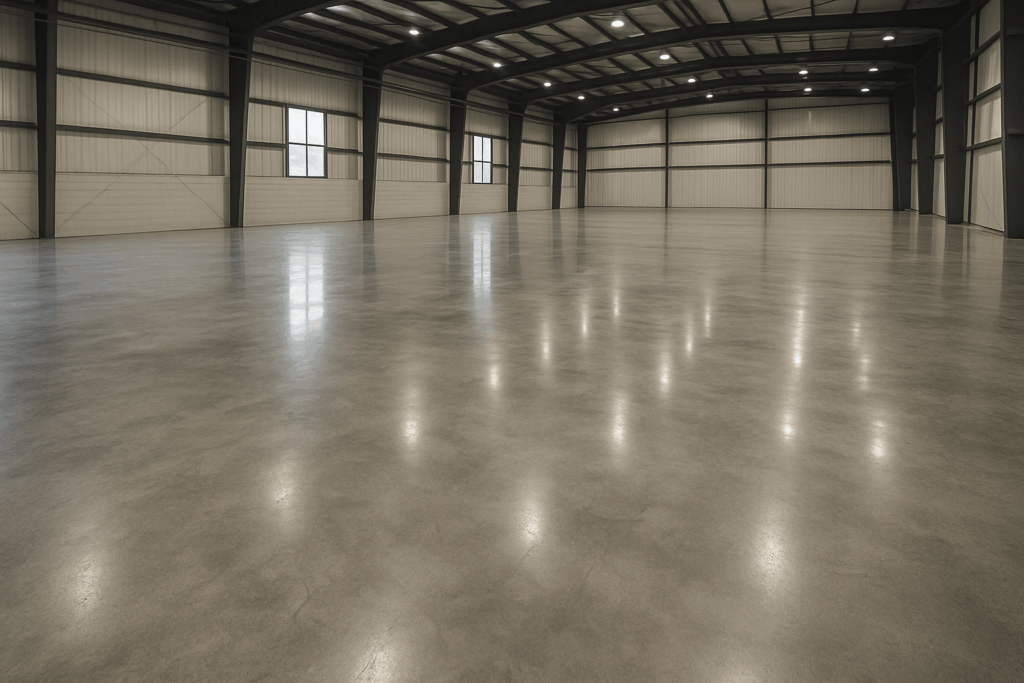
Polished Concrete Flooring Systems
When Polished to a high shine concrete turns your existing slab into a sleek, professional surface. It’s smooth and reflective, bouncing light around your space. This can lower your electricity bills by reducing the need for extra lights.
Polished floors resist stains and need little upkeep. The concrete polishing process makes the concrete denser, making it more durable. Your floor will look great for years with just basic cleaning.
The process works with your current slab, saving money. It also eliminates dust issues common in warehouses. This creates a professional space that impresses clients and meets your durability needs.
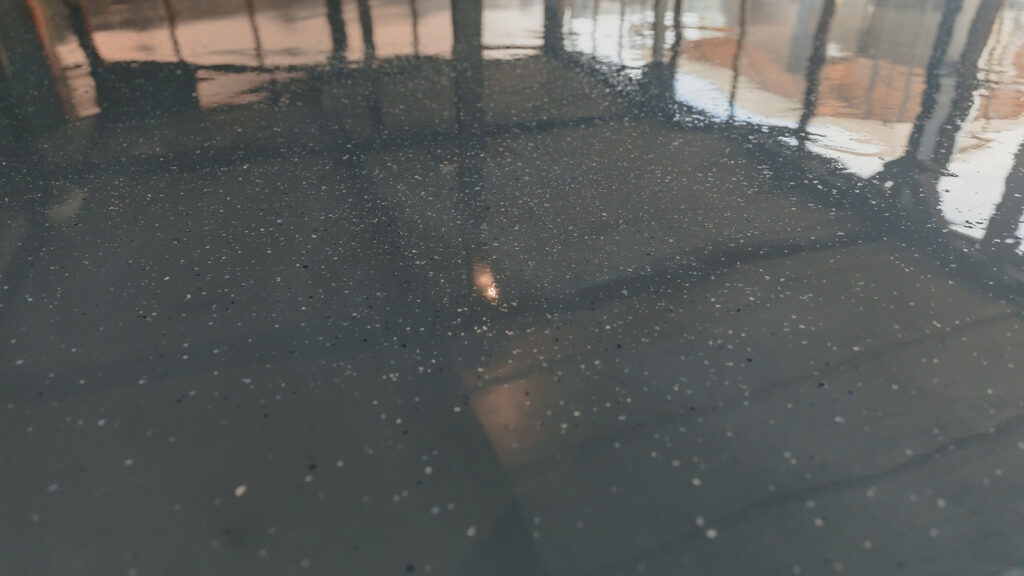
Epoxy Coating and Finding the Best Flooring Options
Epoxy flooring is a top choice for warehouses, creating a protective barrier. It bonds to your concrete, resisting chemicals and heavy equipment damage. We’ve seen epoxy systems last over a decade with heavy use.
Epoxy coating is anti-slip, making your warehouse safer. It also reflects light, cutting lighting costs and improving visibility. Warehouse epoxy flooring and polished concrete coating come in various types to fit your needs and chemical exposure.
Cleaning with epoxy floor coating is easy because spills and stains don’t penetrate. The seamless surface eliminates dirt and bacteria hiding spots. Your team will appreciate how fast they can clean large areas.
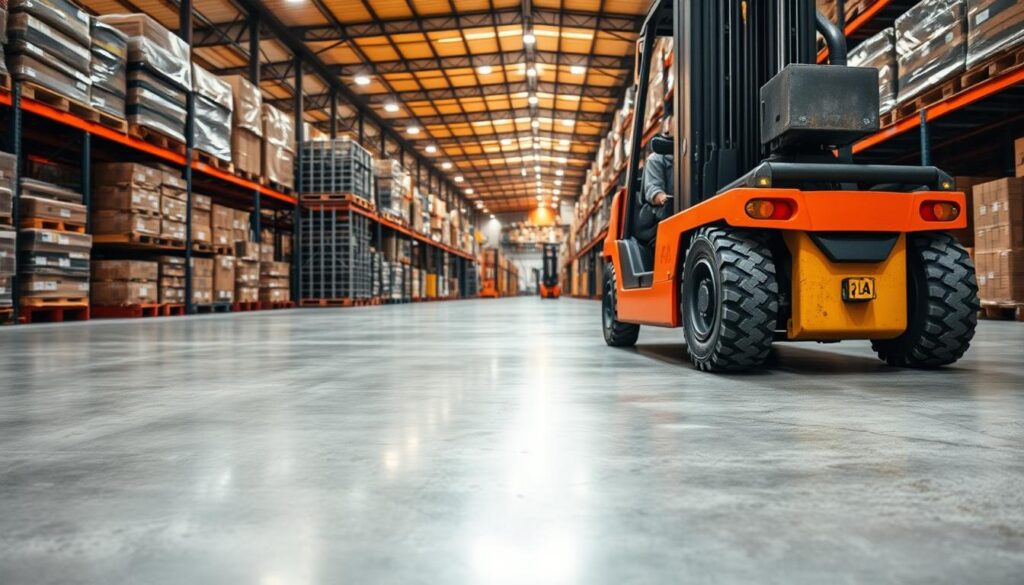
Sealed and Treated Concrete Surfaces
Sealed concrete is a middle option that improves your existing concrete without the cost of epoxy. It creates a protective barrier from within, improving stain resistance and cleaning ease. It’s a cost-effective choice compared to full floor replacement.
Sealed concrete is best for warehouses needing better performance than bare concrete but not epoxy’s heavy-duty protection. It reduces dusting and resists oil and chemical penetration. The application is faster than polished concrete, disrupting your operations less.
The life of sealed concrete depends on your traffic and chemical exposure. Most sealed surfaces perform well for several years before needing reapplication. This option gives you time to plan for future upgrades while improving your current conditions.
Learn More: Techniques for High-Quality Concrete Pouring in Commercial Projects
| Flooring Solution | Installation Cost | Durability Rating | Maintenance Level | Chemical Resistance |
| Polished Concrete | Moderate | High | Low | Good |
| Epoxy Coating | High | Excellent | Very Low | Excellent |
| Sealed Concrete | Low | Good | Moderate | Fair |
| Light Reflection | Excellent | Good | Fair | N/A |
Key Benefits and Practical Considerations for Warehouse Floor Needs
What makes a floor stand out in a warehouse? It’s about how well it performs under pressure. At MBC Management in Houston, we focus on choosing flooring that meets key performance needs without breaking the bank. The right floor choice affects everything from daily work to long-term profits.
Today’s warehouses need floors that can take a beating. The wrong choice can lead to expensive fixes, safety hazards, and work stoppages. Knowing the benefits helps owners make smart choices for their spaces.
Learn More: Warehouse Construction Timeline Overview
Durability Against Forklift Traffic and Heavy Loads
Regular concrete can’t handle today’s warehouse demands. We’ve seen it crack and chip under forklifts and heavy machinery. Warehouse storage puts floors under constant stress, leading to damage and structural problems.
Enhanced concrete systems spread weight evenly. They can withstand up to 50,000 pounds without showing wear. Their design absorbs impact, preventing cracks in standard concrete floors.
Epoxy and resinous flooring fix damage and boost strength. They resist impact and heavy loads, day after day. These floor finishes also offer slip-resistant surfaces, making work safer and reducing accidents.
Chemical Spill Resistance and Easy Maintenance
Chemical spills are common in warehouses. From hydraulic fluid leaks to cleaning chemical accidents, floors in a warehouse need to resist oils, acids, and more. We’ve helped warehouses deal with these issues daily.
The correct warehouse flooring solutions make cleanup easy. It keeps floors strong even when exposed to harsh substances. This saves your flooring investment for a long time.
Easy maintenance means lower costs. Commercial and industrial spaces benefit from floors that need little upkeep but perform well. Cleaning is simple, and deep maintenance is rare.
Cost Analysis and Installation Requirements
Smart owners look beyond the initial cost. Premium concrete solutions cost more upfront but save money in the long run. We suggest considering total cost of ownership, not just the purchase price.
Installation timing is key to success. We work around your schedule to minimize downtime. This is vital for busy facilities that can’t afford long shutdowns.
| Flooring Type | Initial Cost per Sq Ft | Expected Lifespan | Maintenance Requirements | Chemical Resistance |
| Regular Concrete | $3-5 | 5-8 years | High | Poor |
| Polished Concrete | $8-12 | 15-20 years | Low | Good |
| Epoxy Coating | $6-10 | 10-15 years | Medium | Excellent |
| Sealed Concrete | $5-8 | 12-18 years | Low | Very Good |
Investing in durable flooring pays off over time. Premium options offer better value than basic concrete floors. This analysis helps owners make choices that support both immediate needs and future growth.
Conclusion
Choosing the right flooring for your warehouse is key. It depends on your specific needs and how you use the space. We’ve looked at top options like polished concrete and epoxy coatings for tough conditions.
Remember, the cheapest option might not be the best in the long run. Quality concrete flooring services last longer and save money. The right flooring protects your investment, whether for heavy machinery or chemical storage.
Working with a skilled flooring company specialist is vital for success. They can help pick the best concrete solution for you. Professional installation ensures your floor works its best.
Whether in Houston or elsewhere, finding the best flooring is important. Don’t settle for untreated concrete. The options we’ve discussed are proven to work well in any warehouse. Your new floor is a big investment in your facility’s future.
FAQ
What are the best warehouse flooring options for heavy forklift traffic?
For heavy forklift traffic, we suggest polished concrete and epoxy flooring. These options can handle 50,000-pound loads every day. Polished concrete spreads weight evenly, while epoxy coatings protect against constant punishment.
How does polished concrete compare to epoxy flooring for warehouse applications?
Both are great for warehouses, but they serve different needs. Polished concrete reflects light, saving on costs and looking sleek. Epoxy concrete flooring is best for areas with spills, thanks to its chemical resistance. We choose the best flooring for your warehouse needs.
Can existing concrete floors be upgraded without complete replacement?
Yes! We can improve your existing concrete floor with polishing or epoxy coatings. These treatments create a protective layer without the need for a new floor. It’s a cost-effective way to enhance your concrete slab.
What type of flooring works best for warehouses with chemical spills?
Epoxy and polished concrete flooring is our top pick for chemical resistance. It resists oils, acids, and cleaning chemical spills. This makes cleanup easy, protecting your floor from damage.
How long do warehouse concrete flooring services typically last?
Quality flooring can last decades with proper care. Epoxy flooring has lasted over ten years with little upkeep. Polished concrete floors are also very durable. The lifespan depends on the right choice and professional installation.
What factors should we consider when choosing flooring for a warehouse
We look at several factors: warehouse operations, forklift traffic, chemical spills, budget, and maintenance. The best flooring balances cost, durability, and performance. We consider your concrete condition and if polishing is enough.
Is polished concrete suitable for all types of concrete warehouse environments?
Polished concrete is good for most warehouses, where looks matter. But, in areas with chemicals, epoxy coatings or combinations might be better. We decide based on your needs.
How much do professional warehouse flooring services and installation cost?
Costs vary by flooring, warehouse size, and concrete condition. Premium options cost more upfront but save money in the long run. We compare costs to help you understand the total investment.
Can warehouse flooring installation be done without shutting down operations?
Yes, we work around your operations to minimize downtime. The timeline depends on the flooring. We plan with you to keep disruption low and ensure quality.
What maintenance is required for different warehouse flooring types?
Maintenance varies by flooring. Polished concrete needs little upkeep, while epoxy coatings need touch-ups. Sealed concrete needs reapplication every few years. All are easier to maintain than untreated concrete.