


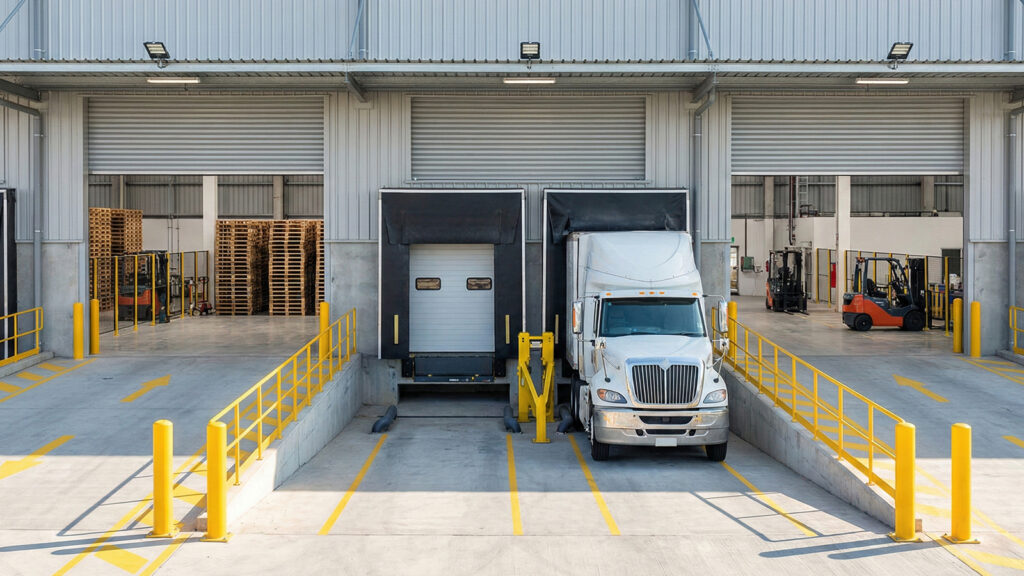
Every successful logistics operation starts with one key spot: where trucks meet your facility. These areas are the main entry and exit for goods. Making this space efficient can greatly improve your supply chain.
Designing your warehouse loading dock involves planning the layout, equipment, and safety features. This careful planning ensures goods move smoothly and safely. A well-designed dock can speed up your operations and protect both people and goods.
This guide to warehouse logistics comes from our experience at MBC Management, where we specialize in building facilities throughout the Houston, Texas area. We’ll share our proven tips on planning, optimizing, and keeping these critical areas in top shape. Whether you’re starting from scratch or upgrading, you’ll learn how to cut costs and boost efficiency.
Key Takeaways
- Loading docks are key for connecting transportation and facility operations
- Right platform design boosts efficiency, safety, and saves money
- Choosing the right equipment and layout makes moving goods faster and safer
- Professional planning cuts long-term costs and keeps workers safe
- Our expertise helps facilities meet current and future needs
- Good planning covers size, equipment, and upkeep needs
Fundamentals of Warehouse Loading Dock Design
Proper loading dock design starts with mastering essential fundamentals. These determine how smoothly goods flow between trucks and warehouses. The success of your warehouse operations hinges on dimensional accuracy, spatial planning, and equipment compatibility.
At MBC Management, we apply these fundamental principles in every warehouse design project throughout the Houston, Texas region. Our approach ensures that dimensional requirements and space planning meet both current operational needs and allow for future expansion of warehouse facilities. Getting the basics right from the start prevents costly modifications and operational disruptions later.
Understanding Loading Dock Design Considerations
The warehouse loading dock serves as a high-traffic portal where internal operations intersect with external logistics. This critical junction requires careful planning to accommodate vehicle movement, personnel safety, and material flow. Understanding design considerations means recognizing how multiple factors work together to create an efficient system.
Spatial dimensions form the first layer of design considerations. You need adequate room for trucks to maneuver, align, and couple safely with the dock face. The loading dock area must accommodate various vehicle types, from delivery vans to full-size refrigerated trailers.
Equipment placement directly impacts operational efficiency. Dock levelers, seals, and material handling equipment all require specific positioning. Traffic patterns must allow smooth flow without creating bottlenecks during peak periods.
Safety protocols represent another critical consideration. The dock and truck interface creates hazards that proper design can mitigate. Key safety factors include:
- Clear sightlines for drivers and dock personnel
- Adequate lighting for all operating conditions
- Weather protection to prevent slips and falls
- Proper drainage systems to avoid water accumulation
- Emergency exit paths and safety equipment placement
Standard Dock Height and Truck Bed Compatibility
Typical docks are built 55 inches (4 feet 7 inches) above grade level to accommodate most trucks. This standard dock height aligns with typical truck bed heights, which range from 48 to 52 inches for standard over-the-road trailers. The slight height difference allows dock levelers to bridge the gap effectively.
Dock height must account for variations caused by multiple factors. Trailer suspension changes as loads are added or removed. A fully loaded trailer sits lower than an empty one due to suspension compression.
Different vehicle types present unique compatibility challenges. The loading and unloading process must accommodate various truck configurations:
- Standard dry van trailers (48-52 inches bed height)
- Refrigerated trailers (typically 48-50 inches)
- Flatbed trucks (variable heights)
- Box trucks and delivery vans (36-48 inches)
- Step deck trailers (lower deck heights)
The maximum legal truck width of 8 feet 6 inches without permit affects dock opening dimensions. Your design must ensure adequate clearance for safe vehicle positioning. This width specification influences door spacing and staging area requirements throughout the facility.
Calculating Dock Approach and Apron Space
The dock approach encompasses the area in front of the dock where trucks maneuver and align. This space requires careful calculation based on trailer length, turning radius, and staging needs. A 60-foot long trailer that is 8 feet 6 inches wide requires a minimum of 510 square feet of staging area.
Door displacement proves critical to effective loading operations. It also serves as a deterrent to bottlenecking from cramped staging areas. The minimum displacement for doors is 12 feet on center of the opening, which provides an overall truck width of 10 feet including the mirrors.
Greater displacements of 14 feet make loading more economical, safer, and easier. This additional spacing allows personnel to move freely around vehicles during the loading and unloading process. The extra room also accommodates material handling equipment operating simultaneously at adjacent dock positions.
Dock apron space must consider multiple operational factors:
- Trailer length and overhang during alignment
- Turning radius for approach and departure
- Staging area for multiple vehicles waiting to dock
- Safe departure routes that prevent congestion
- Space for yard tractors to maneuver trailers
Trailers can be loaded to a height of 10 feet, which affects clearance requirements in the dock area. Your design must account for this vertical dimension in addition to horizontal spacing. Overhead obstructions like lighting fixtures or signage must clear this height.
Determining Dock Positions for Your Warehouse Operations
Calculating the correct number of dock positions requires a systematic approach. You must consider the number of trucks received per day, delivery schedules, and the volume of pallets processed per hour. This analysis ensures your facility can handle peak demand without creating delays.
The formula for calculating dock positions is:
Number of Dock Positions = Trucks per Hour × Turnaround Time per Truck.
This calculation provides a baseline for planning your loading dock area. Turnaround time includes the complete cycle from truck arrival to departure.
Several variables affect this calculation:
- Daily truck arrivals and departure schedules
- Average time per load and unload cycle
- Product type and handling complexity
- Material handling equipment speed and availability
- Whether operations require simultaneous docking
- Number of trailers typically staged at your dock
Consider how many pallets can be loaded or unloaded per hour at one opening. This rate depends on product characteristics, equipment efficiency, and personnel experience. A facility handling small parcels operates differently than one moving bulk pallets.
Peak period demands often exceed average calculations. Seasonal fluctuations, promotional events, and market changes all impact dock position requirements. Building in capacity for growth prevents operational constraints as your business expands.
| Operational Factor | Typical Range | Impact on Dock Positions |
|---|---|---|
| Trucks per Day | 20-200 vehicles | Determines baseline dock quantity needed |
| Turnaround Time | 30-90 minutes | Longer times require more positions |
| Pallets per Hour | 15-40 pallets | Higher rates reduce position requirements |
| Operating Hours | 8-24 hours daily | Extended hours reduce total positions needed |
Proper fundamental planning prevents costly operational bottlenecks and equipment damage. It also reduces safety incidents and creates efficient material flow. A well-designed loading dock area supports current throughput demands while accommodating future growth in shipping volume and operational complexity.
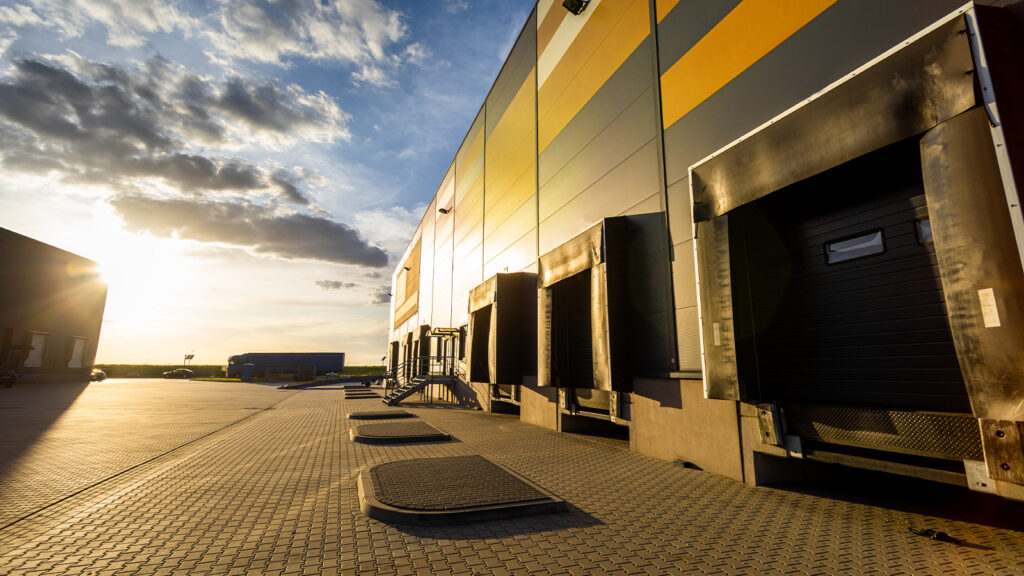
Different Types of Loading Docks and Configurations
Warehouses have several loading dock types, each solving specific problems. The choice depends on space, climate, product type, and traffic. Knowing these options helps managers improve efficiency and cut costs.
Different docks offer benefits for various environments. From simple designs to complex layouts, the choice affects efficiency and energy use. It’s important to analyze current needs and future plans when choosing.
Flush Loading Dock Design
A flush dock has the dock face against the building wall. Trucks back up straight, making loading easy. This design is common in U.S. warehouses.
Flush docks are great for standard operations. They’re easy for drivers to use and help with loading equipment placement. They work best with enough space for trucks to maneuver.
Cost is a big plus for flush docks. They’re simple to build and maintain. This makes them a popular choice for many facilities.
Enclosed docks have walls and climate control, protecting products. Open docks are cheaper and let in air. The choice depends on the products and environment.
Enclosed docks keep the bay safe from weather and security threats. They’re best for sensitive products.
Advantages of enclosed docks include:
- Weather protection for products and people
- Temperature control during loading
- Enhanced security
- Less energy loss
- Protection from dust and debris
Open docks are cheaper and let in air. They’re good for weather-resistant goods and places with mild weather.
Open docks are suitable for:
- Weather-resistant goods
- Mild climates
- Fast truck turnover
- Budget-friendly projects
- Places where air is more important than climate control
Weather affects the choice between enclosed and open docks. Houston’s hot, humid weather might make enclosed docks worth the extra cost.
| Feature | Enclosed Dock | Open Dock |
|---|---|---|
| Initial Cost | Higher investment required | Lower construction expenses |
| Weather Protection | Complete environmental control | Minimal protection, canopy only |
| Energy Efficiency | Maintains temperature control | Higher energy loss |
| Best Applications | Climate-sensitive products, pharmaceuticals, electronics | Non-perishable goods, building materials, general freight |
| Maintenance Requirements | Doors, seals, HVAC systems need regular service | Minimal maintenance on simple structures |
Saw-Tooth Dock Layouts
Saw-tooth docks angle bays to the building, improving traffic flow. Angles range from 45 to 60 degrees. This design solves several challenges at once.
The angled approach makes traffic flow better. Trucks pull in at an angle and drive straight out. This reduces accidents and saves time.
Saw-tooth docks save space. They fit more dock doors in a given length. This is great for small yards.
Saw-tooth docks are ideal for:
- Urban warehouses
- High-volume facilities
- Places with frequent truck turnover
- Sites with bottlenecks
- Facilities prioritizing driver safety
Angled positioning requires less apron space. Trucks need less room to align. This makes land use more efficient.
Choosing the right dock involves site constraints and needs. MBC Management in Houston helps pick the best design. They consider land, building, weather, and product types.
The right dock balances cost, function, and efficiency. Each warehouse has unique needs. Professional advice ensures the chosen design meets these needs.
Essential Loading Dock Equipment for Efficient Operations
Essential loading dock equipment is key to efficient warehouse operations. It connects your facility to the transportation network. The right equipment turns a basic concrete platform into a sophisticated material handling system.
A well-designed loading dock integrates multiple components. These components ensure safety, productivity, and protection for both personnel and products.
Every functional loading dock needs specific equipment. This equipment bridges physical gaps, protects against weather, and secures trucks during loading operations. At MBC Management, we specialize in high-quality loading dock equipment throughout the Houston, Texas area. We ensure all components work together seamlessly.
Dock Levelers: Bridging the Gap Between Dock and Truck
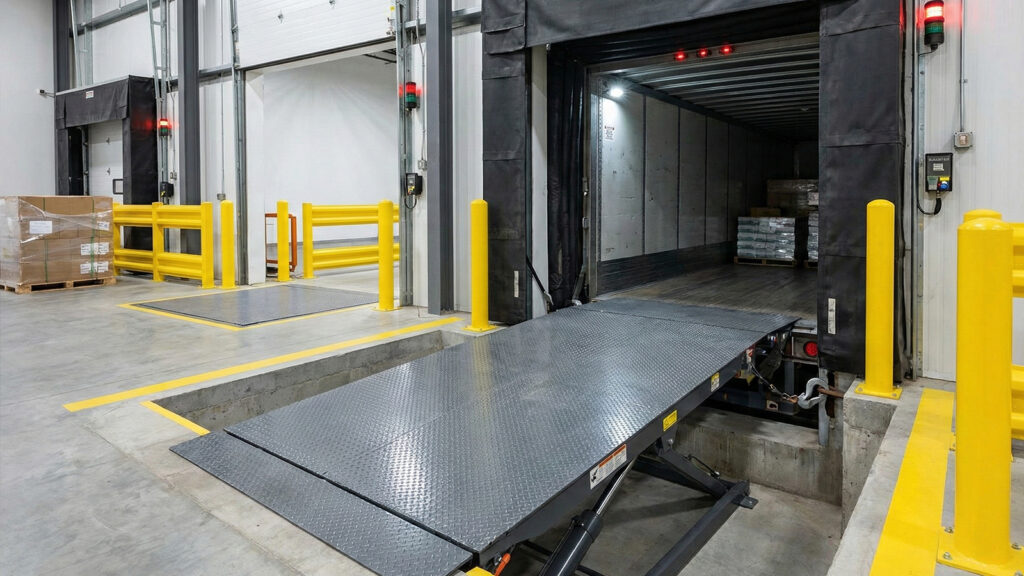
Dock levelers bridge the gap between the dock and the truck bed. They adjust for varying trailer types and ensure safe forklift transitions. Without them, forklifts would struggle to safely move between the warehouse floor and trailer interiors.
Recessed pit levelers are the most versatile and durable option. They install flush with the dock floor in a concrete pit. They offer a 12-inch above and below dock height range, with special configurations extending to 18 inches of vertical travel.
Hydraulic dock levelers provide smooth, controlled operation. They’re certified to ANSI MH30.1-2022 standards for safety and performance. These units handle the heaviest forklifts and material handling equipment with ease.
Edge-of-dock levelers mount directly on the dock face. They offer an economical alternative for facilities with limited height variation. These compact units provide 5 inches of vertical range above and below dock height for gas forklifts. For other equipment types, the range reduces to 3 inches, making proper assessment of your truck fleet critical.
Proper dock leveler sizing ensures safe, efficient loading operations. The minimum length should be 6 feet, though 8 feet is ideal for adequate reach into trailers. Standard width measures 6 feet to accommodate modern 96-inch wide trailers.
Lip projection requires careful consideration based on your trailer types. A minimum 16-inch lip projection works for standard trailers. Refrigerated trailers with recessed openings need 18 inches or longer to bridge the gap between the dock and truck safely.
Load capacity calculations must account for your heaviest equipment. Multiply the forklift’s gross vehicle weight by 2.5 for light to normal use. Heavy-use applications require a multiplier of 3 to 4 times the GVW for adequate safety margins.
| Dock Leveler Type | Vertical Range | Installation Method | Best Application |
|---|---|---|---|
| Recessed Pit Hydraulic | 12-18 inches above/below | Flush-mounted in concrete pit | High-volume facilities with varied truck types |
| Edge-of-Dock Mechanical | 3-5 inches above/below | Mounted on dock face | Budget-conscious operations with minimal height variation |
| Vertical Storing Hydraulic | 12 inches above/below | Deck stores vertically against building | Climate-controlled facilities requiring maximum seal |
Dock Seals and Shelters: Protecting Your Loading Dock Area
Dock seals and shelters seal the gap between the trailer and building. They provide critical climate control and freight protection. These components prevent energy loss, weather infiltration, and product damage.
Compression foam dock seals create weather-tight barriers by compressing against the trailer’s rear surface. Proper sizing generates 80 pounds of compression force per square foot of contact area. This tight seal prevents rain, snow, and debris from entering the facility while maintaining temperature control inside the building.
Dock shelters provide flexible fabric enclosures that accommodate varying trailer sizes. These systems allow personnel to access the full dock opening during loading operations. They work best for facilities handling diverse truck types, from 9 to 12 feet wide and high, with minimum 18-inch extension past dock bumpers.
Selection between dock seals and shelters depends on specific operational requirements. Facilities prioritizing maximum environmental protection choose compression foam seals. Operations requiring flexibility for varying trailer sizes and full dock door access select shelter configurations.
Both systems dramatically reduce energy costs in climate-controlled warehouses. They shield the loading dock from outdoor conditions, protecting temperature-sensitive products. This protection proves valuable in Houston’s hot, humid climate where maintaining interior conditions impacts product quality and worker comfort.
Critical Loading Dock Equipment and Safety Features
Beyond levelers and environmental protection, several other pieces of equipment create safe, efficient loading dock operations. These safety features work together to prevent accidents, protect personnel, and streamline the loading process. Proper integration of these components distinguishes a basic dock from a well-designed loading dock system.
Dock bumpers absorb 90 to 95 percent of truck impact forces when vehicles back into position. Molded or laminated rubber bumpers measuring 4 to 6 inches thick protect the dock face from damage. Steel-faced bumpers handle high-frequency applications where standard rubber would wear quickly.
Bumper height selection depends on your trailer configurations. Heights range from 6 to 36 inches to match different trailer bed levels. Proper bumper placement prevents structural damage to both the building and approaching trucks.
Vehicle restraints prevent dangerous trailer movement during loading operations. These critical safety features secure trucks in place by engaging the rear impact guard or wheels. They eliminate “trailer creep” that causes forklifts to drive off dock edges, preventing potentially fatal accidents.
Communication light systems provide clear visual signals for safe operations. Red and green lights visible to both truck drivers and dock workers indicate when it’s safe to move vehicles or proceed with loading. These simple systems prevent accidents caused by miscommunication between personnel inside and outside the facility.
Dock lights illuminate dark trailer interiors, reducing injury risks and product damage. Proper lighting helps forklift operators see clearly when maneuvering material handling equipment inside trailers. This visibility improvement speeds operations while protecting both personnel and inventory.
Safety barriers and gates prevent accidental forklift run-offs from dock edges. These physical barriers deploy automatically when no trailer occupies the dock position. They provide critical fall protection for equipment and operators.
Modern interlock systems coordinate multiple loading dock equipment functions simultaneously. These systems integrate powered dock levelers with vehicle restraints and dock door controls. They enforce proper safety sequences, preventing leveler deployment until trucks are secured and doors are open.
Additional essential equipment includes dock plates for bridging small gaps, wheel chocks for backup restraint, and fan systems for trailer ventilation during extended loading periods. Each component plays a specific role in creating efficient loading operations.
Our expertise in warehouse design and equipment at MBC Management ensures proper specification and integration of all loading dock components. This approach creates systems where dock levelers, seals, bumpers, restraints, lighting, and safety devices work together seamlessly. The result is loading dock operations that maximize efficiency while protecting personnel, products, and equipment throughout demanding daily cycles.
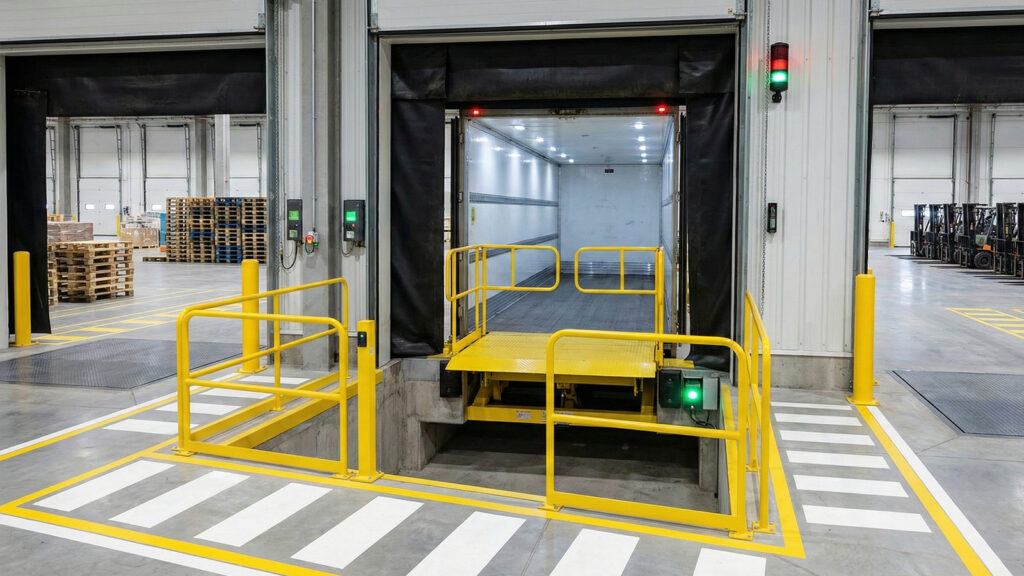
Loading Dock Safety Measures and Efficiency Best Practices
Warehouses face a big challenge: keeping workers safe while moving goods fast. The loading dock is one of the most dangerous places in a warehouse. But, by following safety rules and improving how things work, we can make it safer and more efficient.
Creating a safe and efficient loading dock needs careful planning. At MBC Management, we build warehouses with safety and efficiency in mind. We help our Houston clients achieve top safety and performance by choosing the right design and equipment.
Implementing Loading Dock Safety Measures
There are many dangers at loading docks, like forklifts near edges and trucks moving unexpectedly. These risks can hurt workers and damage equipment.
To keep everyone safe, we need to use many safety measures. Barriers and communication systems are key. They help prevent accidents and keep everyone informed.
Important safety features include:
- Guardrails and safety gates at dock edges to stop forklifts and falls
- Systems to keep trucks in place during loading, not just wheel chocks
- Red and green lights with sounds to show when it’s safe to move
- LED lights with sensors for good visibility in the dock and trailers
- Dock levelers with safety features like automatic lip extension
- Clear signs for dock plate use and where people should walk
Following safety rules is essential. OSHA has rules for forklifts and dockboards. ANSI also has standards for dock levelers.
Training is also important. Workers need to know how to use dock plates and forklifts safely. They should also know how to talk to truck drivers. This helps keep everyone safe.
Maximizing Loading Dock Efficiency
An efficient loading dock is key for fast truck loading and unloading. But, problems like too few dock positions or poor planning can slow things down. To make a dock efficient, start by figuring out how many dock positions you need. Use a formula to avoid not having enough space. This helps your warehouse run smoothly.
Designing traffic flow is also important. Separate lanes for trucks and clear signs help avoid accidents. Strategic entry and exit points reduce congestion during busy times.
Staging areas inside need enough space for trailers. At least 510 square feet per 60-foot trailer is needed. This space should be easy for forklifts to get to, saving time and reducing accidents.
Forklift aisles behind ramps should be at least 15 feet wide. This allows for safe travel and prevents accidents. Keeping forklifts away from dock edges is also important.
Using technology can improve dock management. Systems like warehouse management and sensor monitoring help keep things running smoothly. This reduces errors and improves safety.Appointing truck arrival times helps avoid congestion. This keeps the dock running smoothly, without delays. It’s all about keeping things moving.
Maintenance of Loading Dock Equipment
Keeping equipment in good shape is essential for a well-run dock. Neglecting maintenance can lead to accidents and inefficiency. Regular checks and services help keep everything working right.
There are different maintenance schedules for different needs. Daily checks by dock staff catch obvious problems. Weekly tests make sure dock levelers work right.
| Inspection Frequency | Equipment Components | Key Checkpoints | Responsible Party |
|---|---|---|---|
| Daily | All dock equipment | Visual damage check, spills, obvious malfunctions | Dock personnel |
| Weekly | Dock levelers, restraints | Operational cycling, lip extension, safety feature function | Dock supervisor |
| Monthly | Complete dock systems | Hydraulics, seals, bumpers, lights, door operation | Maintenance staff |
| Quarterly | All mechanical systems | Professional inspection, adjustments, lubrication, minor repairs | Qualified technicians |
| Annual | Critical wear components | Comprehensive overhaul, anticipated replacement before failure | Certified service provider |
Monthly checks look at hydraulic systems and mechanical parts. Dock seals and bumpers are checked for damage. Vehicle restraint systems are tested too.
Communication lights and dock doors need regular checks. Lighting must be good for safety. This keeps the dock safe and efficient.
Quick action is needed for equipment problems. Safety issues like damaged guardrails or broken restraints must be fixed fast. Spills or bad lighting also need quick attention.
Good maintenance avoids expensive repairs and keeps things running. A well-maintained dock is efficient and safe. This makes it a valuable asset, not a problem.
Conclusion
A well-designed loading dock is key to your warehouse’s success. This guide shows how to make a safe, efficient, and cost-effective facility. A good design helps avoid damage to goods and improves how materials move.
The loading dock is vital for any warehouse’s success. It involves planning, choosing the right equipment, and following safety rules. A well-designed dock makes your operations smoother and cheaper.
Using these design tips can really help your business. You’ll see less damage, longer equipment life, and lower upkeep costs. A well-planned dock keeps people safe and moves goods fast.
At MBC Management, we’re here to help throughout Houston, Texas. We bring years of experience in making loading docks efficient and safe. Whether you’re working on a new project or improving your current facility, we provide expert guidance to make your warehouse better with smart loading dock design.
FAQ
1. How long does it typically take to load and unload a truck at a warehouse?
Most facilities average 30-90 minutes per truck turnaround, depending on the product type and material handling equipment used at your loading bay. This time includes positioning the truck, completing the transfer, and safely departing the dock.
2. What does a dock leveler actually do?
A dock leveler bridges the gap between your loading bay and the truck bed, creating a smooth transition for forklifts and other equipment to safely move between the warehouse and trailer. Without one, the height difference in a modern warehouse would make it extremely difficult and dangerous to transfer goods.
3. How far apart should dock doors be spaced?
We recommend spacing loading dock doors at least 12 feet on center, though 14 feet is ideal for better efficiency and safety. This spacing allows personnel and equipment to work safely around trucks without creating dangerous bottlenecks during busy periods.
4. What are the biggest safety concerns for loading dock operations?
The two most critical risks are forklifts driving off unprotected dock edges and trailers pulling away unexpectedly during loading. That’s why we always recommend vehicle restraints, safety gates, and communication light systems as essential components of any type of dock you choose.
5. Should I choose an enclosed or open loading bay for my warehouse?
The choice depends on your products and climate—enclosed bays offer complete weather protection and temperature control, while open designs cost less upfront. Here in Houston’s hot, humid climate, enclosed loading dock doors often provide better long-term value for protecting temperature-sensitive products and maintaining comfortable working conditions.