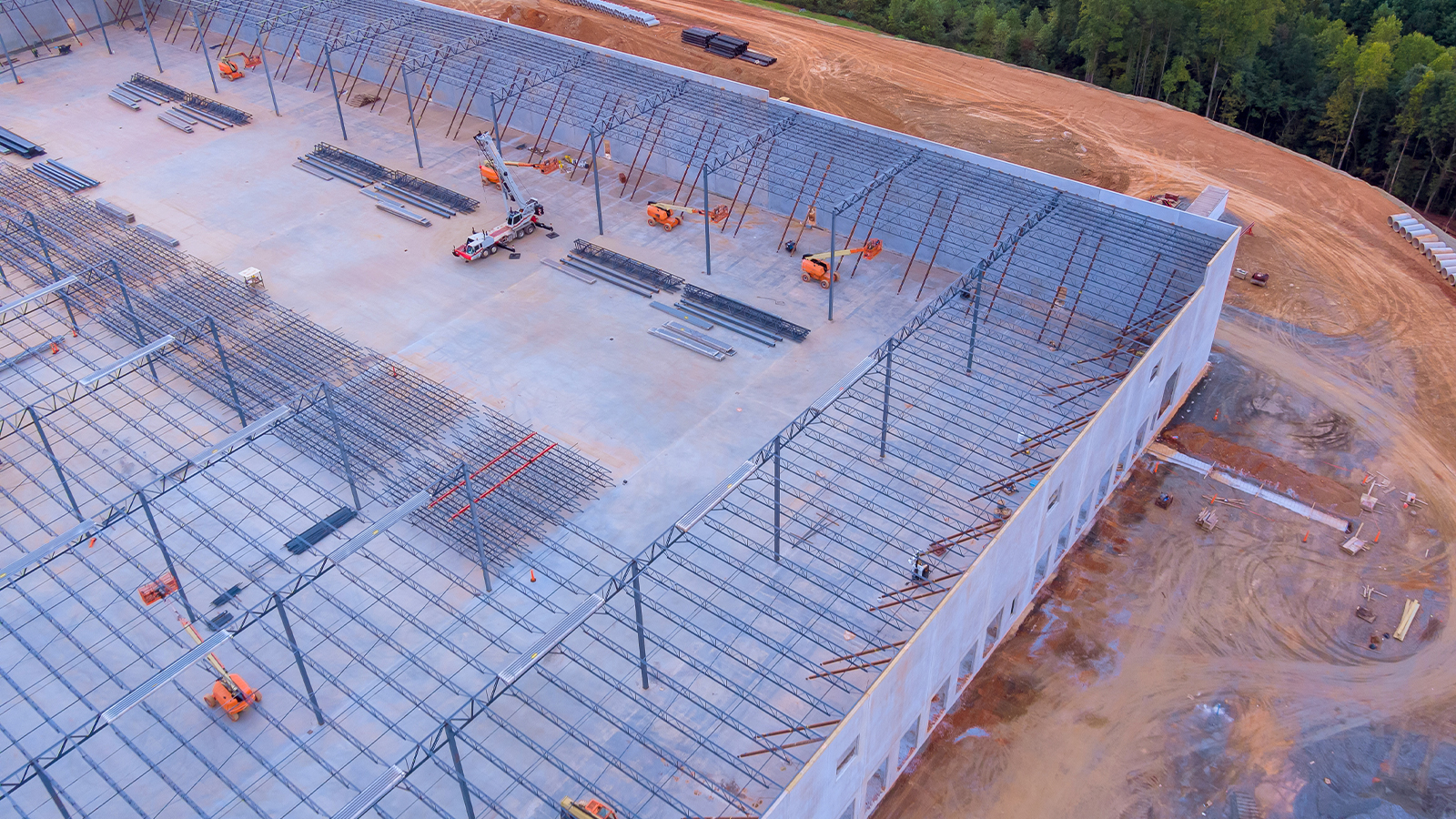
Texas continues to draw warehousing, logistics, and distribution operations at a pace that strains project pipelines from Houston to the Panhandle. Whether you are breaking ground on a new distribution facility or expanding an existing one, the right general contractor you hire determines whether your project finishes on schedule, on budget, and built to code.
Selecting the right construction firm is not like hiring a residential remodeler. Industrial construction involves structural engineering, regulatory approvals, phased reviews, and coordination across multiple trades simultaneously. A poor selection decision can produce costly delays, cost overruns, or structural deficiencies that become long-term liability.
This guide explains how to choose the best commercial contractor for a large-format industrial build.
Key Takeaways
- Verify licenses and insurance, including general liability and workers’ compensation, before signing any agreement.
- Experience in industrial and large-format construction predicts project success more reliably than price alone.
- Strong project management, including proactive scheduling and communication, directly determines whether a project is completed as planned.
- Choosing based on price alone is among the most common selection errors — firms that undercut competitors typically carry hidden gaps or quality trade-offs.
- Check references from past clients on projects that match your scope and complexity.
- Compliance with local regulations and building codes is non-negotiable — confirm permit compliance documentation for similar Texas projects.
Introduction – Choosing The Right General Contractor For Your Warehouse Construction Project
The construction industry in Texas ranks among the most active in the country. Warehouse and distribution center development has expanded significantly across the Houston metro, Central Texas, and surrounding counties, driven by supply chain investment, e-commerce growth, and industrial demand. For project owners, that growth means more options — and more due diligence required to distinguish dependable builders from firms without the depth to deliver.
A structured evaluation process is essential before committing to a commercial construction firm. This guide covers the criteria, questions, and red flags that matter most when hiring the right firm for a new industrial build or major expansion. Identifying a dependable partner requires more than comparing bids — it requires verifying credentials, reviewing project history, and asking the right questions.
MBC Management specializes in commercial and industrial construction across Central Texas and the greater Houston area, with capabilities from concept to completion.
What to Look for in a General Contractor
Commercial Track Record
Not all construction companies operate at the same scale or complexity. A contractor with experience in large-format industrial builds brings specialized knowledge of structural steel systems, concrete slab specifications, dock-high configurations, and the coordination demands of a new-build project. That knowledge does not transfer automatically from residential or retail space work.
When assessing candidates among commercial construction companies, ask specifically about warehouse projects. Request a portfolio of completed projects that includes facilities of comparable square footage and use type. An experienced industrial contractor should be able to speak in technical terms about clear-span design, floor load ratings, and system integration.
Delivery Method: Which Approach Fits Your Project
The delivery method a firm uses shapes how the project is managed from the start. Under a single-contract arrangement, one firm handles both design and construction, which streamlines decision-making and reduces handoff gaps between architect and builder. The alternative separates those functions, giving the owner more design control but adding coordination responsibility.
A firm well-versed in both approaches can advise which fits your project timeline, site conditions, and budget. MBC Management uses a single-firm approach and handles new construction from initial concept through final sign-off.
Construction Management Capabilities
Projects of this scale require coordination across civil, structural, mechanical, electrical, and plumbing trades. This encompasses scheduling, trade coordination, RFI management, and detailed progress reporting. A firm with weak infrastructure here creates direct exposure to delays, cost drift, and communication failures.
Ask how the firm manages subcontractors and how field supervisors are assigned to active jobs. A construction group that dedicates a project manager to your build — rather than a supervisor splitting attention across multiple sites — is a meaningful operational signal.
Evaluating a Commercial Construction Company Before You Sign
Licenses and Insurance
Every contractor in Texas must hold the appropriate state and local licenses for commercial work. Before any agreement is finalized, confirm that the firm holds current documentation independently. Required coverage includes liability and workers’ compensation for all field employees.
Request current certificates — not expired paperwork submitted as a formality. Confirm that any firm you retain provides insurance certificates naming your entity as an additional insured where contractually applicable.
References and Field Credentials
When checking references from past clients, focus on commercial construction projects comparable in scope to yours. Ask specifically whether the firm delivered on time and on cost, whether the firm communicated problems early, and whether disputes were handled professionally. Online reviews on Google and industry platforms reveal patterns in responsiveness and dispute history.
A firm with this experience will have a strong safety record that can be independently verified. Request OSHA 300 logs and ask for the experience modification rate (EMR) — a metric reflecting historical safety performance. An EMR below 1.0 indicates disciplined field operations. An EMR above 1.25 warrants close scrutiny.
Financial Stability
Construction projects can stall mid-build when a firm runs into cash flow problems. Evaluate financial health by asking for bonding capacity — the maximum project value a surety will underwrite. Firms that cannot provide bonding documentation represent a real risk to project continuity.
For larger builds, require a payment and performance bond. This protects your investment if the firm defaults on supplier payments, which can otherwise result in mechanic’s liens against your property.
Pre-Signing Questions Before You Sign
This is a multi-stage process. Once you have cleared the license, insurance, and reference baseline, the interview phase lets you assess communication approach and depth. Questions to ask before signing include:
How many active jobs are currently in construction, and how is this project staffed? A firm stretched across too many simultaneous builds will not give your project the attention it requires. Who is the project manager assigned to this job, and what is their specific commercial experience? How does the firm handle regulatory applications and inspections in this county? What is your process when a subcontractor falls behind schedule? The answer reveals whether the team takes a proactive approach to keeping projects on track. Walk me through how you handle budget variances and change orders. Transparency in financial reporting is a reliable indicator of overall integrity.
These questions apply whether you are planning a new build or a major tenant improvement. The best firms answer with operational specifics, not generalities.
Selection Errors That Will Cost You Later
Basing Your Decision Solely on Price
The competitive pricing process naturally draws attention to cost, but choosing the right contractor means looking beyond the lowest number. A proposal that undercuts competitors by 15% or more typically reflects coverage gaps, tight contingencies with no buffer built in, or quality trade-offs — all of which create financial exposure.
Review proposals line by line and compare line items directly across firms. If one estimate is materially lower, ask a local contractor what typically drives that gap before committing.
Ignoring Local Regulatory Requirements
Commercial structures in Texas require regulatory approvals at the municipality or county level. Large commercial builds may also trigger requirements from the Texas Commission on Environmental Quality, the fire marshal’s office, or utility providers. A firm that treats these requirements as a formality — or that starts work before approvals are in place — transfers liability directly to the project owner.
All zoning requirements and code standards must be confirmed before work begins. Permitting processes vary significantly across Texas jurisdictions. Prioritize firms that have established relationships in the specific county or municipality where your project is located — it reduces administrative delays.
Underestimating Timeline Risk
Project schedules in commercial construction carry direct financial weight — delays translate into higher financing costs, delayed occupancy, and operational disruption. A project timeline should not be a best-case projection. It needs to account for weather, lead times on long-procurement materials like structural steel, and regulatory review windows.
Request a phased milestone schedule, not a single completion date. Staying on schedule under real field conditions is what separates a proven industrial firm from a generalist who undercut to fill a calendar gap.
New Warehouse Construction in Texas: What to Expect
Pre-Construction Phase
New construction of this scale involves a pre-construction phase that can run 6-12 weeks depending on jurisdiction, project complexity, and regulatory review volume. This phase covers site plan approval, civil engineering, utility coordination, and required regulatory filings. An experienced firm coordinates with county and city engineers in advance to prevent administrative delays.
Construction Phases and Inspections
Once approvals are in place, the construction process moves through defined phases: site work and foundation, structural frame, building envelope, interior buildout, and systems installation. Each phase includes inspections tied to project milestones. A firm that fails inspections due to non-compliant work resets those milestones, adding weeks to the project.
MBC Management’s large-format construction approach includes dedicated oversight for each phase, with a single point of contact from initial approvals through certificate of occupancy.
Conclusion
Knowing how to select the right contractor for a project of this type in Texas is a decision with lasting consequences — for your schedule, your budget, and the quality of what gets built. The firms that deliver commercial projects on time and on budget build their reputation around subcontractor oversight, regulatory compliance, and clear field communication — not the lowest initial number.
MBC Management has built that track record across Central Texas and Greater Houston. Contact MBC Management today to discuss your construction needs and connect with a team that delivers from initial approvals through certificate of occupancy.
Frequently Asked Questions
What should I look for when hiring a commercial contractor for an industrial project in Texas?
Look for a firm with documented experience in industrial and oversized facilities. Confirm licenses and insurance, review references from comparable completed builds, and verify a structured approach to project oversight. General construction capability does not substitute for specialized industrial experience.
What is the difference between design-build and traditional construction?
Under a single-contract model, one firm handles both design and construction, streamlining communication and reducing handoff gaps. The separated-contract approach assigns those functions independently, giving the owner more design control but more coordination responsibility. The right choice depends on your budget, timeline, and tolerance for managing the process.
How do I evaluate proposals from commercial construction companies?
Review each proposal on a line-item basis rather than comparing totals. Verify that all proposals include the same work, that exclusions are documented, and that allowances reflect realistic costs. A proposal materially lower than competitors typically signals scope gaps or subcontractor quality trade-offs — get the firm to explain the difference before making a decision based on price alone.
What regulatory approvals are required for industrial construction in Texas?
Requirements vary by county and municipality, but most commercial projects require site plan approval, structural review, fire marshal coordination, and utility approvals. Projects near environmentally sensitive areas may trigger additional TCEQ requirements. An experienced firm manages this as a structured part of pre-construction, not as an afterthought.
How important is a firm’s safety performance when reviewing an industrial contractor?
Field safety metrics are an objective indicator of management quality. Request the firm’s EMR and field safety logs. An EMR below 1.0 reflects above-average performance and disciplined operations. Consistent safety practices reduce the risk of work stoppages, injury liability claims, and financial exposure on your project.
What are the most common mistakes to avoid when hiring a general contractor?
The most common mistakes are selecting a contractor based on price without reviewing qualifications and vendor depth, failing to verify credentials before signing, and not establishing a detailed phased project schedule. Each creates direct exposure to cost overruns, schedule failures, or compliance problems.
How do I know if a commercial general contractor can handle a ground-up commercial project?
Request examples of comparable completed projects, focusing on size and use type. Ask how they managed subcontractors, navigated regulatory requirements, and resolved field issues. A qualified firm will answer with operational specifics, not marketing language.