
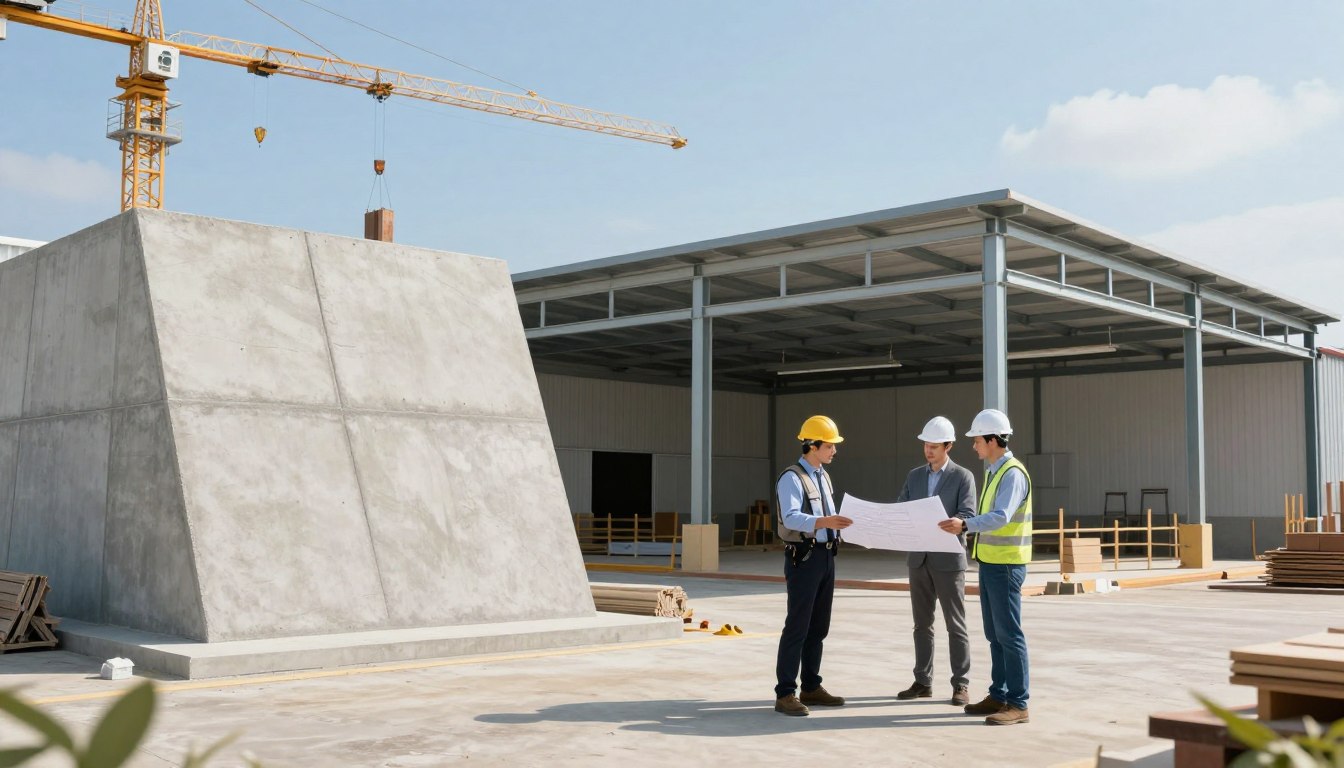
Building a new warehouse needs careful planning and smart choices. The construction industry offers two main methods for industrial buildings. Concrete tilt-up and pre-engineered steel systems each have their own benefits for your project.
In Southeast Texas, these solutions meet different needs for building owners. Tilt-up construction is used in 15% of industrial buildings in the U.S. These buildings range from small to very large, over 1.5 million square feet. On the other hand, pre-engineered steel warehouses make up nearly 70% of commercial building projects.
MBCM is an expert in both methods in Southeast Texas. Our company helps owners choose the best option for their warehouses and commercial projects. Each method fits different needs, budgets, and timelines. Your choice will impact the success of your industrial buildings for years.
Key Takeaways
- Tilt-up construction serves 15% of industrial buildings in the United States
- Pre-engineered steel buildings account for 70% of commercial structures nationwide
- Both construction methods offer distinct advantages for different warehouse needs
- Pre-engineered steel systems became popular starting in the 1960s
- MBCM specializes in both methods throughout Southeast Texas
Understanding Modern Warehouse Construction Methods
The warehouse construction industry has changed a lot over the years. Today, business owners have two main building methods to choose from. Each method has its own benefits, like quick assembly or lasting durability. Knowing about these methods can help you decide on your next warehouse project.
What Is Tilt-Up Construction?
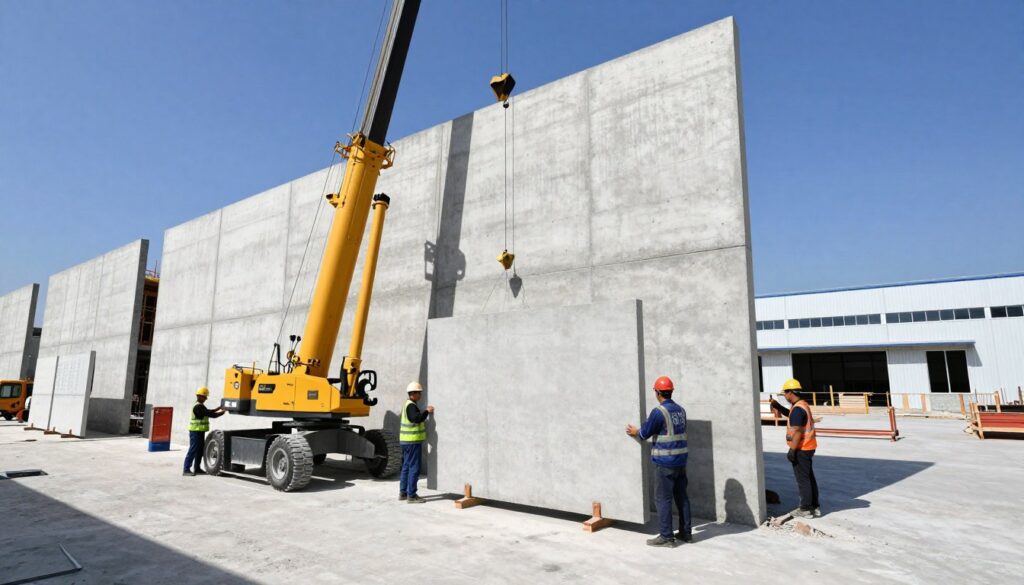
Tilt-up construction involves making large concrete wall panels on the ground. After the concrete hardens, cranes lift these panels up to form the building’s walls. These walls are then fixed to a foundation slab.
This method became popular during World War I for its speed and cost-effectiveness. Now, tilt-up buildings are used for many commercial needs. The process includes:
- Pouring concrete panels on-site in horizontal forms
- Allowing proper concrete curing time for strength development
- Lifting panels into place using cranes and specialized equipment
- Connecting adjacent concrete structures for stability
What Are Pre-Engineered Steel Buildings?
Pre-engineered steel buildings are a different way to build warehouses. They come as complete kits, made in factories. The parts are bolted together, not welded or made of concrete.
Steel buildings have a long history, starting in 1793. The Belper North Mill in England, rebuilt with steel in 1803, is a great example of steel’s strength. By 1902, the Flatiron Building showed steel’s ability for tall buildings.
Evolution of Commercial Building Solutions in Southeast Texas
In Southeast Texas, both construction methods have grown from simple warehouses to complex commercial spaces. Modern tilt-up buildings now have fancy designs and can be tall. Pre-engineered buildings have also changed, from simple storage to large, climate-controlled centers. Both methods have adapted to the region’s weather and growing industrial needs.
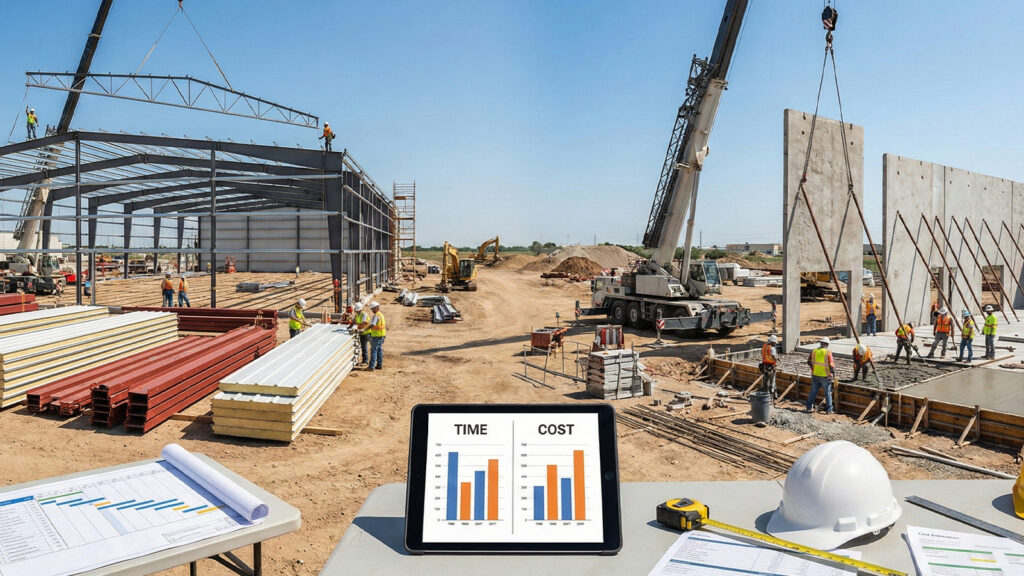
Cost Analysis and Construction Timelines
When deciding between tilt-up and pre-engineered buildings for your warehouse, it’s important to consider costs and time. Both options have their benefits, like saving money and building fast. But, the best choice depends on your project’s needs and the building’s size.
Initial Investment vs. Long-Term Cost Savings
Steel buildings and tilt-up construction have different upfront costs. For smaller projects, pre-engineered buildings are often cheaper. They save money on things like crane rentals and special equipment.
But, tilt-up might seem cheaper at first because of lower material costs. Yet, when you add up all the costs, steel buildings are often more affordable.
Looking at long-term costs, some projects might find steel buildings more cost-effective. This is because steel buildings are easier to modify and can be more energy-efficient. Concrete buildings might be better for insulation in certain climates.
Speed of Construction Comparison
Pre-fabricated metal buildings are built fast. Their parts are ready to go, so they can start building right away, no matter the weather. This makes construction 33% faster than traditional methods.
Tilt-up construction can be slower because of concrete pouring needs and weather. Cement supply chain issues can also delay it. Steel buildings avoid these delays by not needing to cure.
Labor and Material Costs Breakdown
Steel buildings are often cheaper because they need less labor. This means developers save money on workers and expertise. Pre-engineered buildings are easier to assemble with fewer people.
| Cost Factor | Pre-Engineered Steel | Tilt-Up Concrete |
|---|---|---|
| Material Costs | Higher per unit | Lower per unit |
| Labor Requirements | 20-30% less hours | Standard crew hours |
| Equipment Rental | Basic cranes | Heavy-duty cranes |
| Weather Delays | Minimal impact | Significant risk |
Steel wall panels cost about the same as EIFS and synthetic stucco. But, they are much cheaper than tilt-up panels. This makes steel buildings a good choice for many projects.
Impact of Project Size on Overall Expenses
The size of the building affects which method is more cost-effective. For smaller warehouses, steel’s faster construction and lower labor costs are a big advantage. But, for larger projects, tilt-up might be more competitive.
Big projects benefit from tilt-up’s lower material costs. It’s important for developers to consider these factors when deciding between steel and concrete.
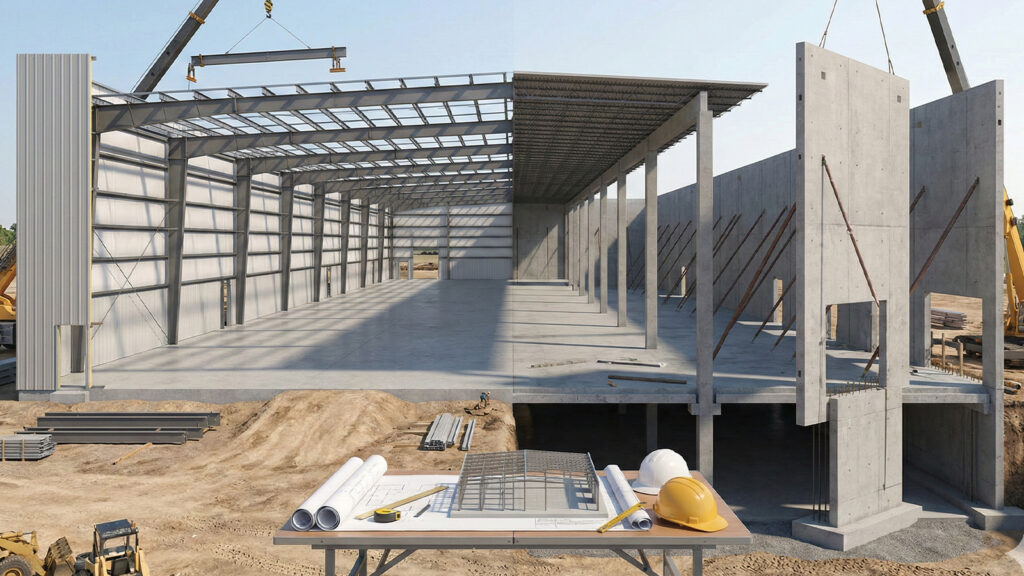
Structural Performance and Design Flexibility
When we look at steel buildings vs tilt-up construction, each has its own strengths for warehouses. Pre-engineered steel and tilt-up concrete have different strengths in structure and design flexibility.
Steel buildings are great for big open spaces. They can span long distances without needing extra support. This makes steel buildings very flexible in design. On the other hand, concrete tilt-up and steel have different foundation needs. Steel is better for sites with hard soil or changing weather.
Concrete has its own benefits, like being tough against impacts and strong winds. It also doesn’t catch fire easily. But, steel buildings need extra protection to match concrete’s fire safety. This includes using insulated metal panels and fireproofing materials.
| Performance Factor | Pre-Engineered Steel | Concrete Tilt-Up |
|---|---|---|
| Clear Span Capability | Up to 300 feet | Up to 60 feet |
| Fire Resistance Rating | 1-2 hours with treatment | 2-4 hours naturally |
| Recycled Content | 95% recycled steel | 20% recycled aggregate |
| Foundation Requirements | Standard footings | Reinforced deep footings |
When it comes to being eco-friendly, each system has its own benefits. Steel is fully recyclable and often made from recycled materials. Concrete, on the other hand, uses local materials, cutting down on emissions. Both can earn LEED points for being green in different ways.
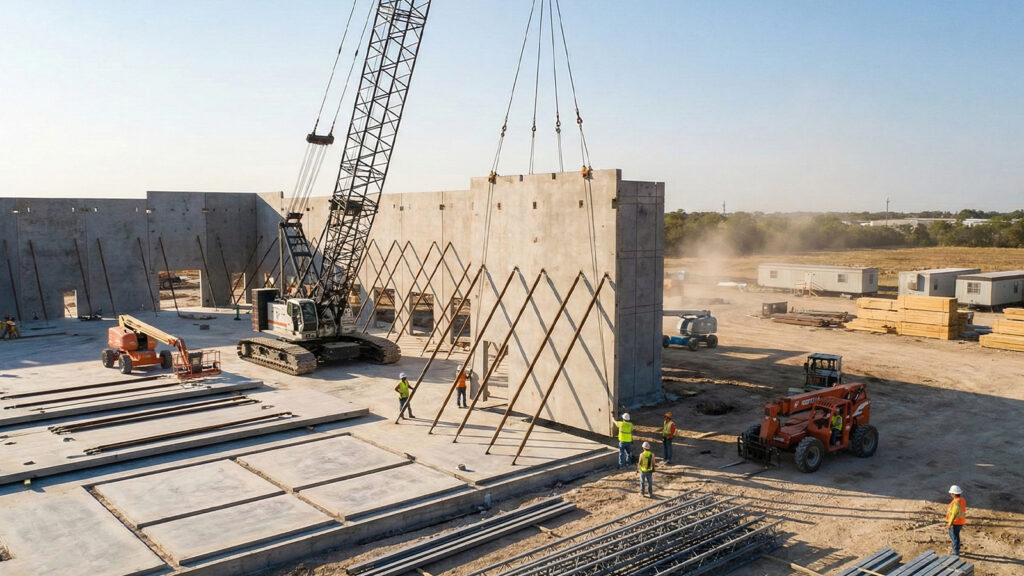
Choosing the Right Construction Method for Your Warehouses
Choosing between tilt-up construction and pre-engineered steel buildings is a big decision. Building owners need to think about their needs, the site, and future plans. The best choice depends on how the building will be used and the site’s challenges.
Evaluating Your Operational Needs
The use of your warehouse is key. Tilt-up construction is great for places with lots of visitors because it’s strong and secure. It also keeps a steady temperature, which is good for places that need to control the climate.
On the other hand, pre-engineered metal buildings are better for storage areas with less public access. They are reliable and need little upkeep, making them perfect for places like aircraft hangars and agricultural storage.
Site Conditions and Weather Considerations
The weather where you’re building is very important. Places near the coast or with harsh weather should use concrete because it resists wind and corrosion. Steel buildings need special coatings to protect against salt and extreme weather.
When to start building is also important. Steel buildings can be built any time of the year. But concrete needs warmer weather to cure, which can limit when you can start building in cold places.
Future Expansion and Modification
Think about if you might need to grow your building in the future. Pre-engineered metal buildings are easy to expand because they’re designed in modules. You can add sections or change the layout without a lot of trouble.
| Expansion Factor | Tilt-Up Construction | Pre-Engineered Steel Building |
|---|---|---|
| Modification Cost | High | Moderate |
| Expansion Speed | 4-6 months | 2-3 months |
| Structural Flexibility | Limited | High |
| Clear Span Capability | Up to 150 feet | Up to 300 feet |
Many warehouses today use a mix of materials. They use tilt-up panels for offices and steel for storage. This way, they get the best of both worlds and meet all their needs.
Why MBCM Is Your Choice For Warehouse Construction
MBCM is a top name in commercial construction in Southeast Texas. They specialize in warehouse projects of all sizes. They offer both concrete tilt-up and pre-engineered steel buildings, choosing the best method for each project.
Southeast Texas has its own set of challenges for industrial buildings. High winds, extreme temperatures, and different soil types require special knowledge. MBCM considers these factors for every project, making sure your building can handle local conditions and meet your needs.
Building owners get a full-service approach from MBCM. They look at your specific needs, from small distribution centers to large manufacturing spaces. They consider:
- Timeline requirements and construction speed
- Budget constraints and material availability
- Long-term operational costs
- Future expansion possibilities
- Site-specific conditions
MBCM finds the best building solution for you. They look at your needs and what’s possible in construction. They might suggest tilt-up construction for durability or metal buildings for quick setup. Their expertise helps you choose the right method, whether it’s concrete, steel, or a mix of both.
With years of experience in Southeast Texas, MBCM builds warehouses that work well from the start and last for decades.
Conclusion
Choosing between tilt-up and pre-engineered steel buildings for your warehouse depends on your specific needs. Each construction method offers unique advantages that suit different building projects. Pre-engineered steel buildings work best for warehouses under 50,000 square feet. They provide cost-effective solutions with faster construction times.
Tilt-up construction becomes more economical for larger industrial buildings where material costs play a bigger role. The steel building vs concrete building debate comes down to your operational requirements. Pre-engineered steel construction delivers 33% faster completion times and allows for easier future modifications.
Tilt-up concrete offers superior fire resistance and better temperature control through thermal mass. Building owners in Southeast Texas face unique weather challenges that make durability a key factor. Both construction solutions protect against severe storms when properly designed and installed.
Your ideal construction method matches your timeline, budget, and long-term goals. Many commercial building projects now combine both methods to maximize benefits. Steel frames with concrete panels create versatile warehouses that balance speed and strength.
MBCM understands the complexities of industrial buildings in Southeast Texas. Their team evaluates site conditions, operational needs, and expansion plans to recommend the right approach for each project. Smart building owners consider both immediate needs and future growth when selecting construction solutions.
The right choice between tilt-up construction and pre-engineered steel buildings sets your business up for success. MBCM brings decades of experience to every warehouse project in Southeast Texas. Their expertise ensures your investment delivers lasting value through the most appropriate construction method for your specific situation.
FAQ
What is the main difference between tilt-up construction and pre-engineered steel buildings?
Tilt-up construction casts concrete wall panels on-site and tilts them into place. Pre-engineered steel buildings are made in a factory and assembled on-site. Concrete tilt-up creates solid structures, while steel uses prefabricated metal components.
Which construction method is more cost-effective for warehouses under 50,000 square feet?
Pre-engineered steel buildings are cheaper for small warehouses. Tilt-up construction has higher costs due to crane rentals. Steel buildings also save on labor and are faster to build.
How much faster is steel building construction compared to concrete tilt-up?
Steel building assembly is 33% faster than other methods. Steel buildings are ready to assemble quickly, weather permitting. Concrete needs time to cure and favorable temperatures.
Which building type offers better fire resistance?
Concrete tilt-up structures are more fire-resistant than steel. Concrete’s durability and fire resistance are key safety benefits, important in industrial settings.
What are the design flexibility advantages of steel buildings vs tilt-up construction?
Metal buildings can span longer distances and have customizable designs. They are easier to modify and can have more glass. Concrete requires larger support columns, limiting flexibility.
Which construction method is better for temperature-controlled warehouses?
Tilt-up concrete is better for temperature control due to its thermal mass. It provides better insulation, making it ideal for facilities needing precise temperature management.
Can tilt-up and steel construction be combined in a single building project?
Yes, combining both materials is common in modern buildings. This approach uses concrete’s durability and steel’s flexibility and speed.
What factors determine whether tilt-up construction is a method suitable for my project?
Consider the building size, site conditions, timelines, and operational needs. Tilt-up is best for large projects and high-traffic facilities needing security and durability.