You’re not alone if you’re confused about the difference between shell and core construction and office fit-outs. Millions of business owners face this same challenge when planning their Houston workspace. The good news is that understanding these concepts doesn’t have to be overwhelming.
Whether you’re a tenant looking at commercial space or a landlord planning office developments, this guide will walk you through everything needed for an office fit-out decision.
Houston’s commercial real estate market moves fast, and making the wrong choice between Cat A fit and Cat B fit-outs can cost thousands of dollars and months of delays. Smart business owners learn these distinctions before signing lease agreements or starting construction projects.
The construction process involves multiple phases, each requiring different expertise and financial commitments that impact your bottom line. Understanding these fundamentals helps you avoid costly mistakes while creating a workspace that supports your business goals effectively.
Key Takeaways
Before diving into the details, here are the five most important things you need to know about office fit-out shell construction in Houston:
- Shell and core construction provides the basic building structure, while fit-outs transform raw space into functional offices
- Cat A fit offers basic finishes, while Cat B fit-outs deliver move-in-ready spaces tailored to the tenant’s specific needs
- Landlord responsibilities typically end at shell completion, making tenant improvements crucial for occupancy
- Professional services like ours at MBC Construction in Houston are essential for any office fit-out to ensure a safe workspace.
Understanding Shell and Core Fit Out Construction in Houston
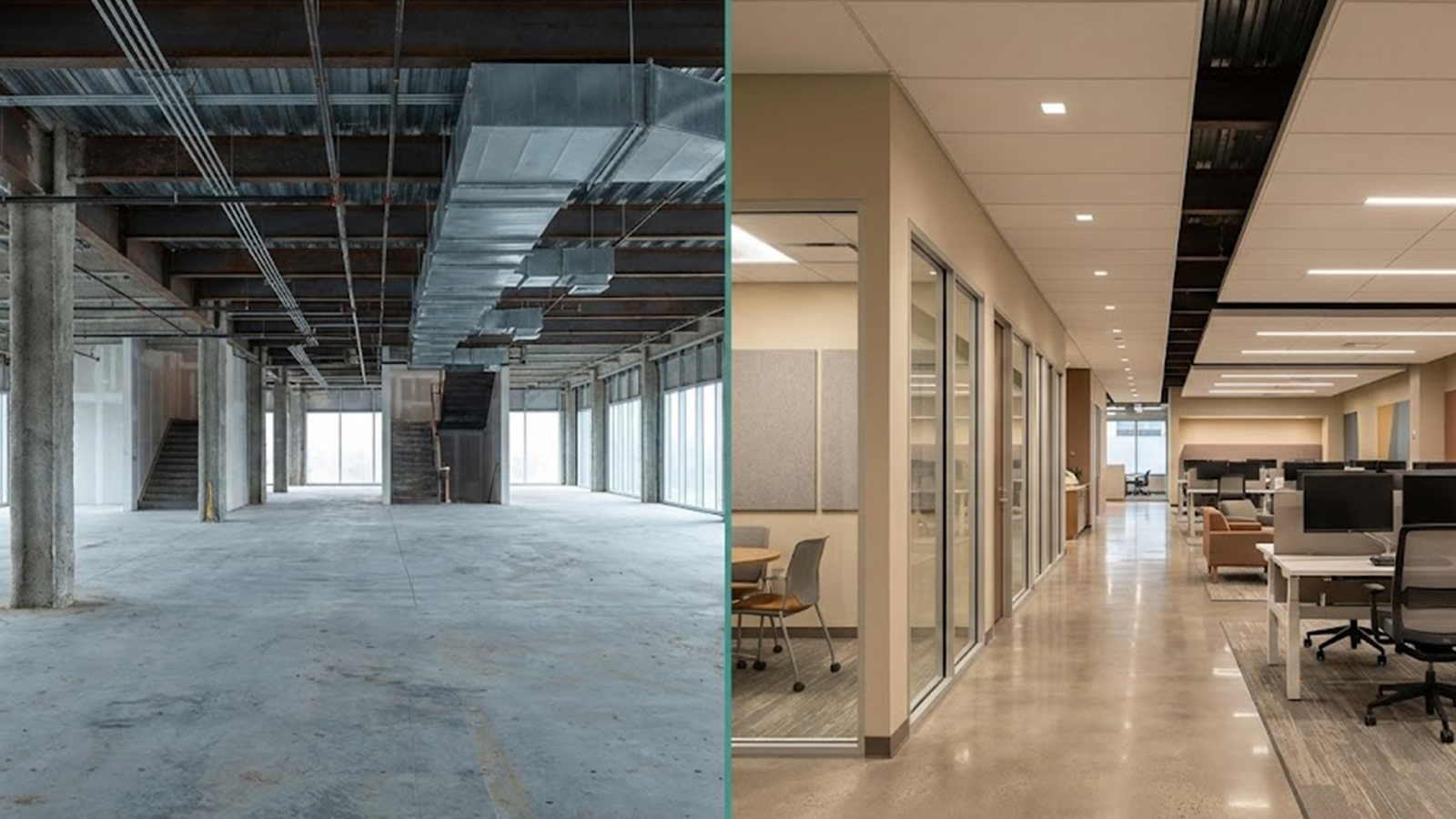
Shell and core construction form the foundation of every commercial building in Houston. This phase creates what’s essentially a blank canvas for future tenant improvement. Core infrastructure includes structural elements, basic HVAC systems, electrical rough-ins, and essential mechanical systems.
In Houston’s competitive commercial market, shell-and-core specifications vary significantly between developments. A cold shell typically provides only the building envelope (exterior walls, windows, roof) and core services, while a warm shell includes completed mechanical and electrical services throughout the floor plate. Most Houston office buildings deliver what’s referred to as a Cat A specification, offering basic finishes like suspended ceilings, standard lighting, and raised floors.
The shell and core phase establishes the building’s fundamental systems that multiple tenants will share. This includes fire detection systems, main HVAC distribution, electrical risers, and plumbing cores. For building construction in Houston, developers must consider the local climate’s impact on these core systems, particularly air conditioning requirements and humidity control.
Shell Construction Timeline and Responsibilities
Understanding the construction timeline helps tenant planning significantly. Shell completion in Houston typically takes 12-18 months for mid-rise office buildings, with high-rise projects extending to 24+ months. During this phase, the landlord or developer maintains full responsibility for meeting local building codes and obtaining necessary permits.
The level of completion at shell delivery affects your fit-out timeline and costs. Basic shell construction includes:
- Structural concrete and steel framework
- Building envelope (exterior walls, windows, roof)
- Core mechanical systems and risers
- Fire detection and safety systems
- Basic electrical distribution to each floor
- Elevator installation and lobby areas
Office Fit Outs: Transforming Space into Workspace
Office fit-outs represent the transformation phase where raw commercial space becomes a functional workspace. This process involves everything from interior design to the installation of partition walls, creating meeting rooms, and establishing breakout areas. The fit-out process allows businesses to tailor their environment to specific operational needs.
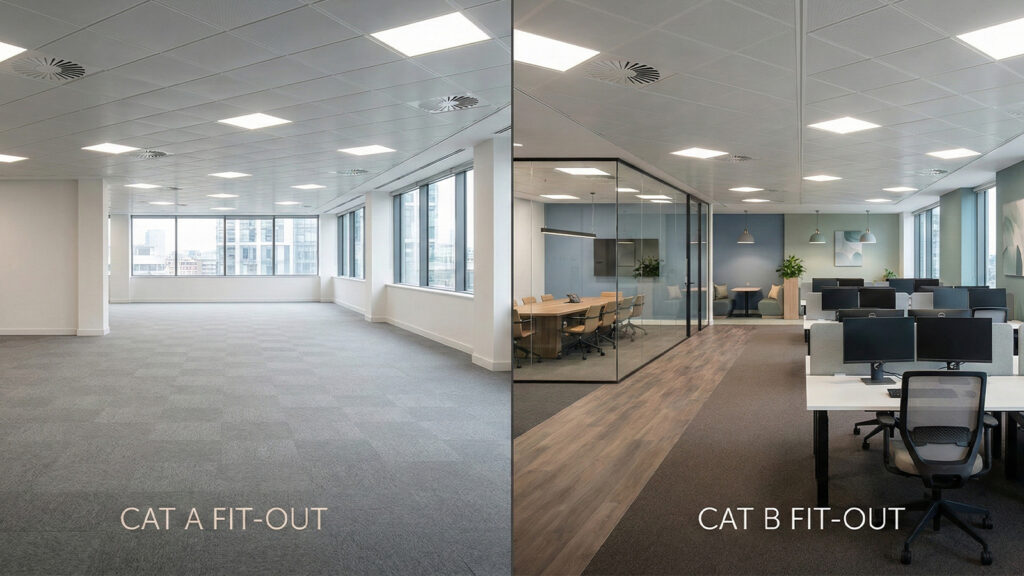
There are different types of office fit approaches, each offering varying levels of customization. A Category A fit provides basic interior finishes, standard lighting systems, and open floor layouts. This type of fit-out includes suspended ceilings, basic flooring, and minimal interior walls, creating a foundation for tenant-specific improvements.
Category B fit-outs deliver fully customized spaces ready for immediate occupancy. These comprehensive fit-outs provide everything needed for an office environment, including branded reception areas, custom meeting rooms, specialized lighting, and tailored mechanical and electrical services. The Cat B specification transforms space into a move-in-ready environment that reflects the occupier’s brand and operational requirements.
Interior Design and Customization Options
The interior design phase shapes how your Houston office space functions daily. Professional fit-out teams work with businesses to create layouts that maximize productivity while reflecting company culture. This includes selecting appropriate flooring materials that withstand Houston’s humidity, designing efficient lighting systems for the local climate, and creating flexible spaces that adapt to changing business needs.
Customization extends beyond aesthetics to include functional elements like specialized HVAC zones, enhanced fire detection coverage, and technology infrastructure. The design and build approach ensures all elements work together seamlessly, from structural modifications to final fixture installation.
Cat A Fit vs Cat B Fit Outs: Understanding the Difference
The difference between the shell and core, Cat A and Cat B specifications significantly impacts your project timeline and budget. Category A fit-outs build upon shell and core construction by adding basic interior finishes. This level typically includes standard ceiling tiles, basic lighting fixtures, raised floor systems, and minimal partition walls.
Cat A provides a functional foundation without tenant-specific customization. The space includes basic finishes like carpet tiles or polished concrete floors, standard suspended ceilings with integrated lighting, and open-plan layouts with minimal interior walls.
Fire detection systems receive basic coverage, and HVAC systems provide standard temperature control without zone-specific customization.
Category B fit-outs represent full customization tailored to specific business needs. This comprehensive approach includes branded reception areas, custom meeting rooms, specialized lighting design, and tenant-specific mechanical systems. Cat B fit-outs transform generic space into environments that reflect company identity and support specific operational workflows.
Comparison of Fit Out Types:
| Aspect | Shell & Core | Cat A Fit | Cat B Fit |
|---|---|---|---|
| Completion Level | 30-40% | 60-70% | 95-100% |
| Interior Walls | None | Basic partitions | Full custom layout |
| Ceiling Systems | Exposed services | Suspended ceilings | Custom ceiling design |
| Lighting | Basic electrical | Standard fixtures | Designed lighting |
| Flooring | Concrete slab | Basic finishes | Premium materials |
| Ready for Use | No | Limited | Immediate occupancy |
Houston-Specific Considerations for Office Fit Outs
Houston’s climate and commercial real estate market create unique considerations for office fit outs. The city’s high humidity levels require enhanced HVAC planning and moisture-resistant material selection. Air conditioning systems need robust dehumidification capabilities, and interior finishes must withstand temperature fluctuations.
Local building codes in Houston emphasize fire safety and hurricane preparedness. Office fit outs must comply with enhanced fire detection requirements and wind-load specifications.
The city’s energy efficiency standards also influence lighting design and mechanical systems selection, particularly for buildings seeking LEED certification.
Houston’s diverse business community creates demand for flexible office designs that accommodate various industries. From energy sector headquarters requiring secure meeting rooms to tech companies needing collaborative breakout areas, fit out design must reflect specific industry requirements while maintaining compliance with local regulations.
Learn More: Stunning Commercial Spaces with Beautiful Concrete Flooring
Cost Factors in Houston Office Fit Outs
Several factors influence fit out costs in Houston’s commercial market:
- Labor rates averaging 10-15% below national averages
- Material costs affected by Gulf Coast shipping advantages
- Permit fees and inspection requirements
- Hurricane-resistant design specifications
- Energy efficiency upgrade incentives
- Local contractor availability and specialization
Houston core fit-outs typically cost less per square foot than Cat B fit-outs, as they involve basic improvements while Cat B installations feature premium finishes and specialized systems.
Working with Contractors and Post Project Clean-Up
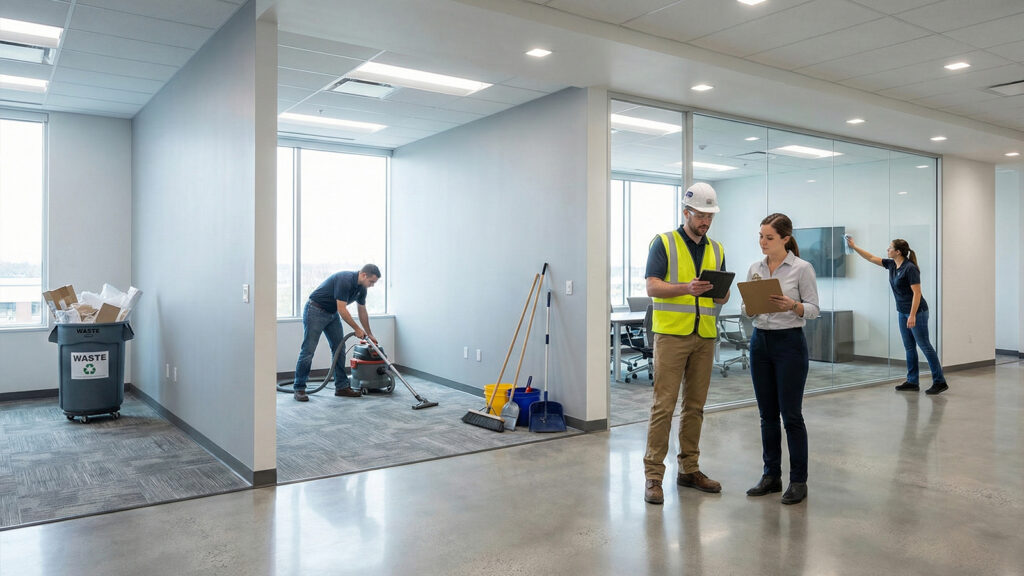
Selecting qualified Houston contractors ensures your office fit out meets local standards and timelines. The construction process generates significant dust and debris, making professional post-project cleaning services essential for safe occupancy. At MBC Construction, a highly rated construction company serving Houston, Texas and its surrounding communities, we provide comprehensive post-construction cleaning services that prepare our newly fitted offices for immediate use.
Post-fit out cleaning involves more than standard janitorial services. Construction debris, dust settling on surfaces, and adhesive residues from their projects require specialized equipment and techniques.
The cleaning process should begin immediately after construction completion but before furniture installation. This approach prevents damage to new investments while ensuring healthy indoor air quality from day one. Professional services like ours at MBC Construction understand which cleaning methods work best with different flooring materials, ceiling systems, and interior finishes commonly used in their Houston office fit out projects.
Our team understands that successful office fit-outs require meticulous attention to every detail, from initial planning through final handover. We coordinate closely with project managers to ensure seamless transitions between construction phases and occupancy preparation. Our experienced crews work efficiently to minimize downtime for businesses eager to move into their newly renovated spaces
Establishing Maintenance Protocols
Proper maintenance begins during the fit out phase with protective measures that preserve new installations. This includes:
- Protective coverings during final construction phases
- Immediate cleaning of spills and debris
- Regular air filtration system maintenance
- Scheduled deep cleaning before occupancy
These proactive measures significantly extend the lifespan of your office fit out investment while maintaining healthy indoor environments for employees. Houston’s humid climate makes regular HVAC filter replacement and moisture control particularly critical during the first six months after occupancy.
Planning Your Houston Office Fit Out Project
Successful office fit out projects require careful planning that considers your business needs, budget constraints, and occupancy timeline. Start by evaluating your space requirements, including current staff levels, growth projections, and operational workflows. This analysis helps determine whether a Cat A fit with tenant improvements or a comprehensive Cat B fit out better serves your needs.
Budget planning should include contingencies for unforeseen conditions, permit delays, and market fluctuations. Houston’s construction market experiences seasonal variations that can affect both material costs and contractor availability. Planning fit out work during optimal periods can result in significant cost savings.
Timeline coordination becomes crucial when existing lease agreements expire before new space completion. Consider temporary space requirements, furniture storage, and employee relocation logistics when planning your fit out schedule.
Essential Fit Out Components Checklist
- Interior walls and partition systems
- Flooring installation and protection
- Ceiling design and suspended systems
- Lighting design and installation
- HVAC customization and zone control
- Fire detection and safety systems
- Technology infrastructure and cabling
- Security systems and access control
- Professional cleaning and preparation
- Furniture installation and setup
Making the Right Choice for Your Business
The decision between different fit out levels depends on several factors specific to your Houston business. Consider your industry requirements, brand image needs, and long-term occupancy plans. Companies planning short-term leases might benefit from Cat A fit with minimal improvements, while businesses establishing long-term headquarters typically invest in comprehensive Cat B fit outs.
Evaluate the total cost of occupancy, not just initial fit out expenses. Higher initial investments in quality fit outs often result in lower long-term maintenance costs and improved employee productivity. Factor in energy efficiency benefits, which become particularly important in Houston’s climate.
Consider the expertise required for your specific industry needs. Healthcare offices require specialized mechanical and electrical services, while financial services need enhanced security and privacy features. Technology companies benefit from flexible infrastructure that adapts to rapid equipment changes.
The refurbishment potential also influences decision-making. Spaces designed with future modifications in mind accommodate business growth and changing needs without major reconstruction. This flexibility becomes valuable in Houston’s dynamic business environment.
Summary
Understanding the difference between shell and core construction and various office fit out options empowers Houston businesses to make informed decisions about their workspace investments. Shell and core provides the foundation, Cat A fit offers basic functionality, and Cat B fit outs deliver customized, move-in ready environments.
Successful projects require careful planning, qualified contractors, and professional services like ours at MBC Construction ensure spaces are ready for healthy, productive occupancy. Whether you choose basic improvements or comprehensive customization, proper planning and execution create workspaces that support business success in Houston’s competitive commercial environment.
Frequently Asked Questions
What’s typically included in shell and core construction in Houston?
Shell and core includes the building structure, basic HVAC distribution, electrical risers, fire detection systems, and elevator cores. It provides a blank canvas for tenant improvements.
How long do office fit outs usually take after shell completion?
Cat A fit outs typically take 8-12 weeks, while comprehensive Cat B fit outs require 12-20 weeks depending on customization complexity and permit requirements.
Who handles cleaning after office fit out construction?
Professional companies like ours MBC Construction specialize in post-construction cleaning after completion of our projects, removing debris and contaminants before occupancy to ensure healthy workspace conditions.
Can fit out work begin before shell construction is finished?
Limited fit out work can overlap with shell completion, but major interior work requires finished core systems including HVAC, electrical distribution, and fire detection systems.
What are typical costs for office fit outs in Houston?
Cat A fit-outs range from lower to moderate costs per square foot, while Cat B fit-outs cost significantly more per square foot, depending on finishes, customization level, and market conditions.